Every module, in depth.
A complete workspace for each part of the operation, all of them sharing one set of records. Each is shown below with real screens from the current build, running against a seeded demonstration company.
What you offer, and what you actually hold.
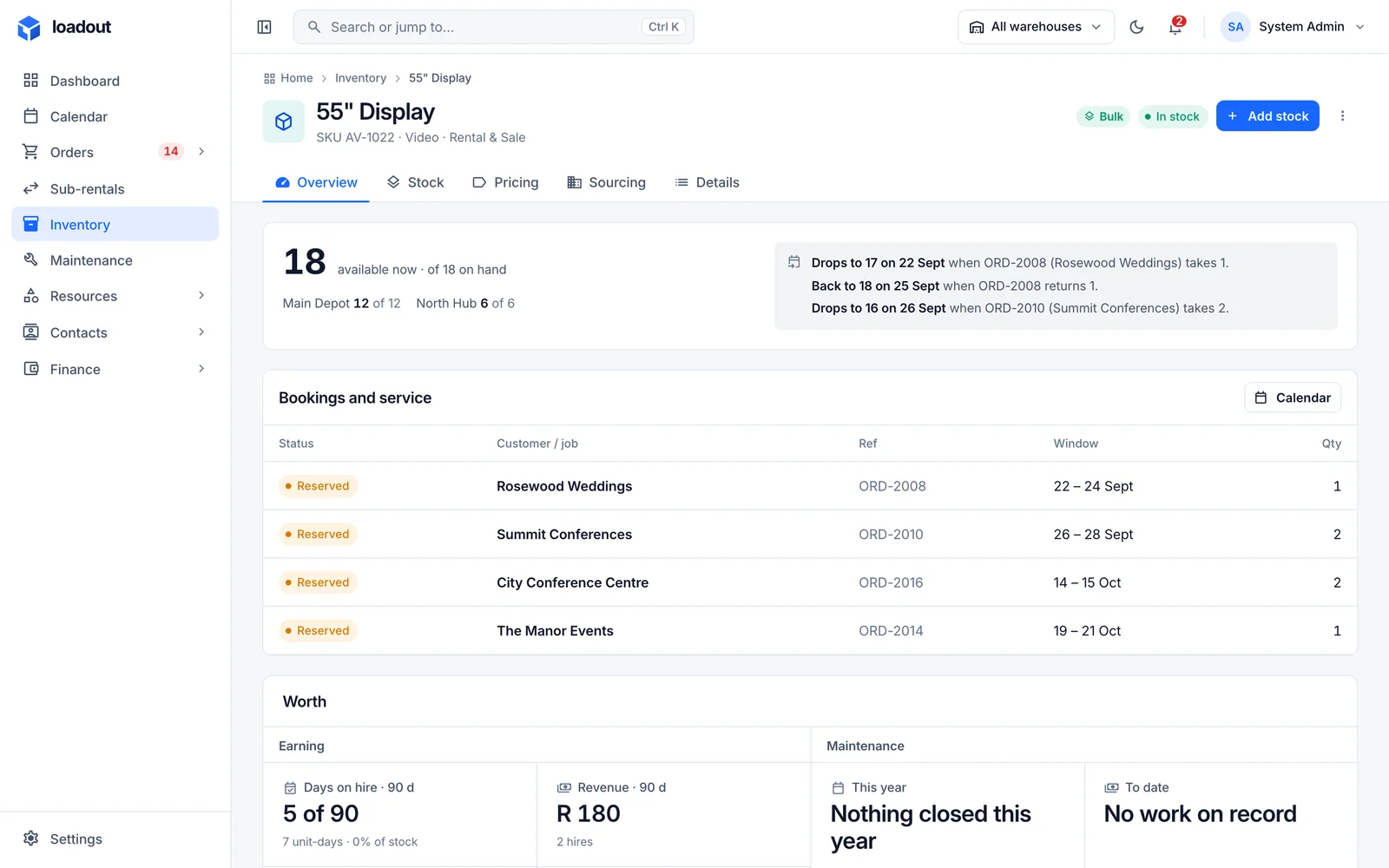
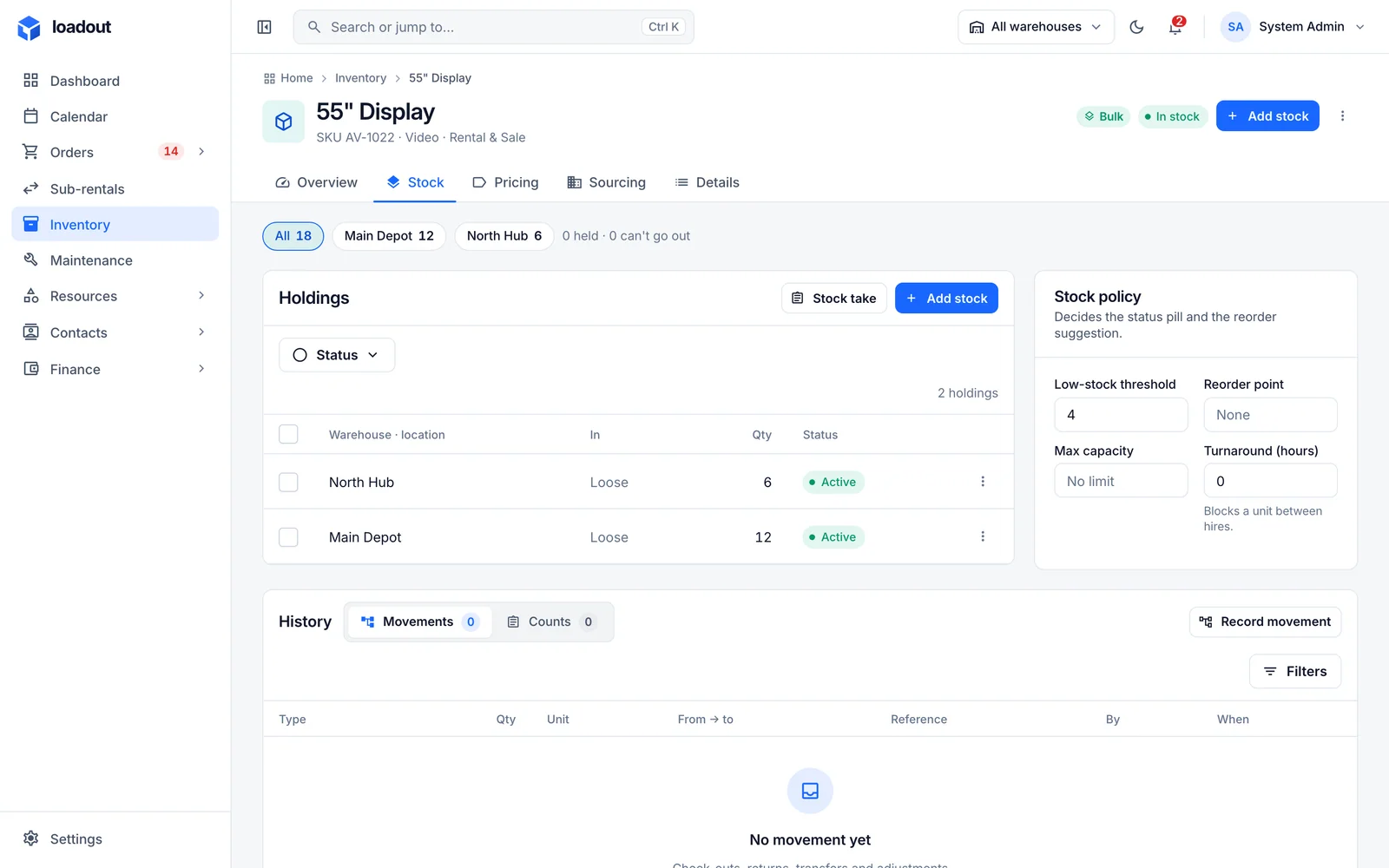
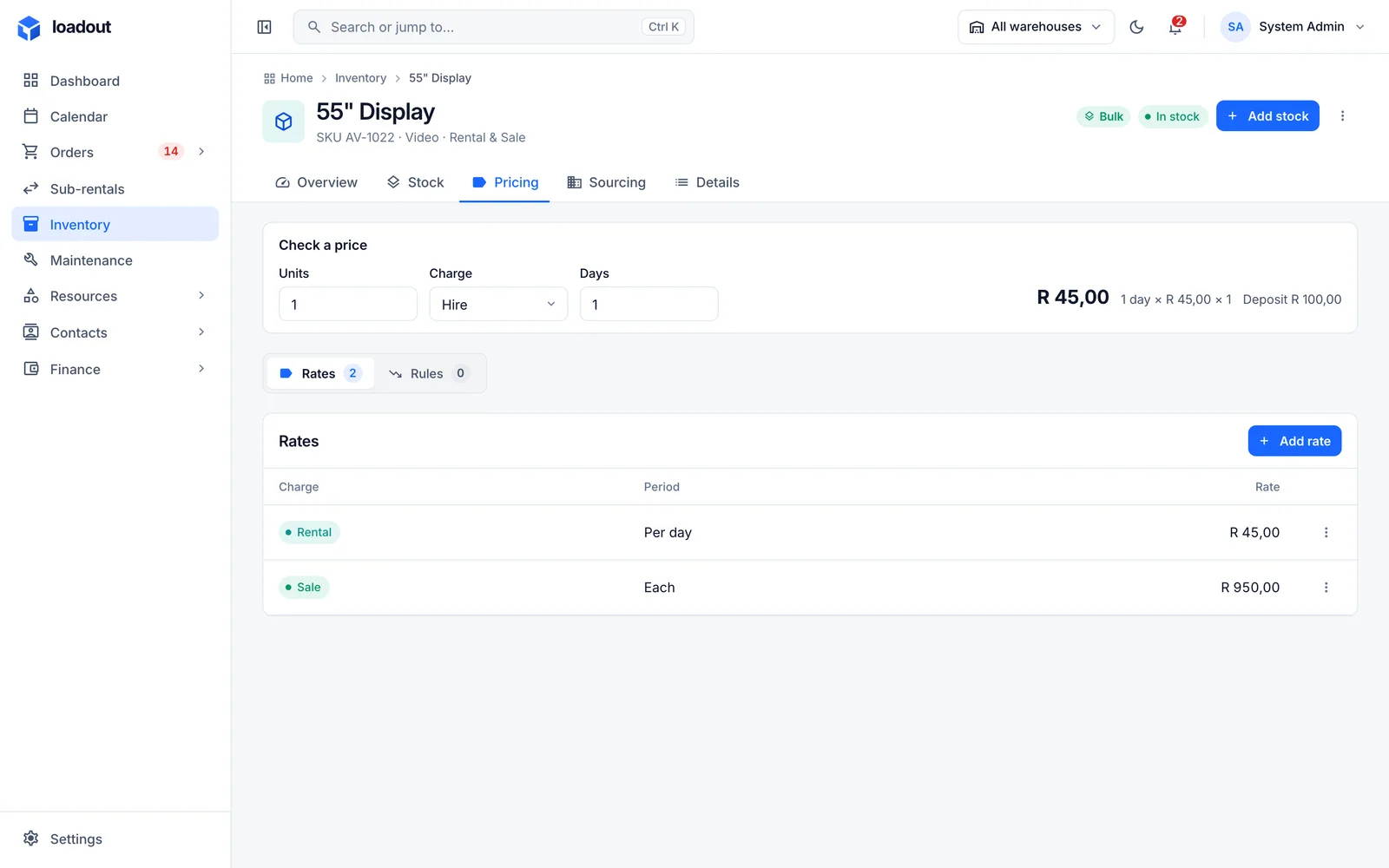
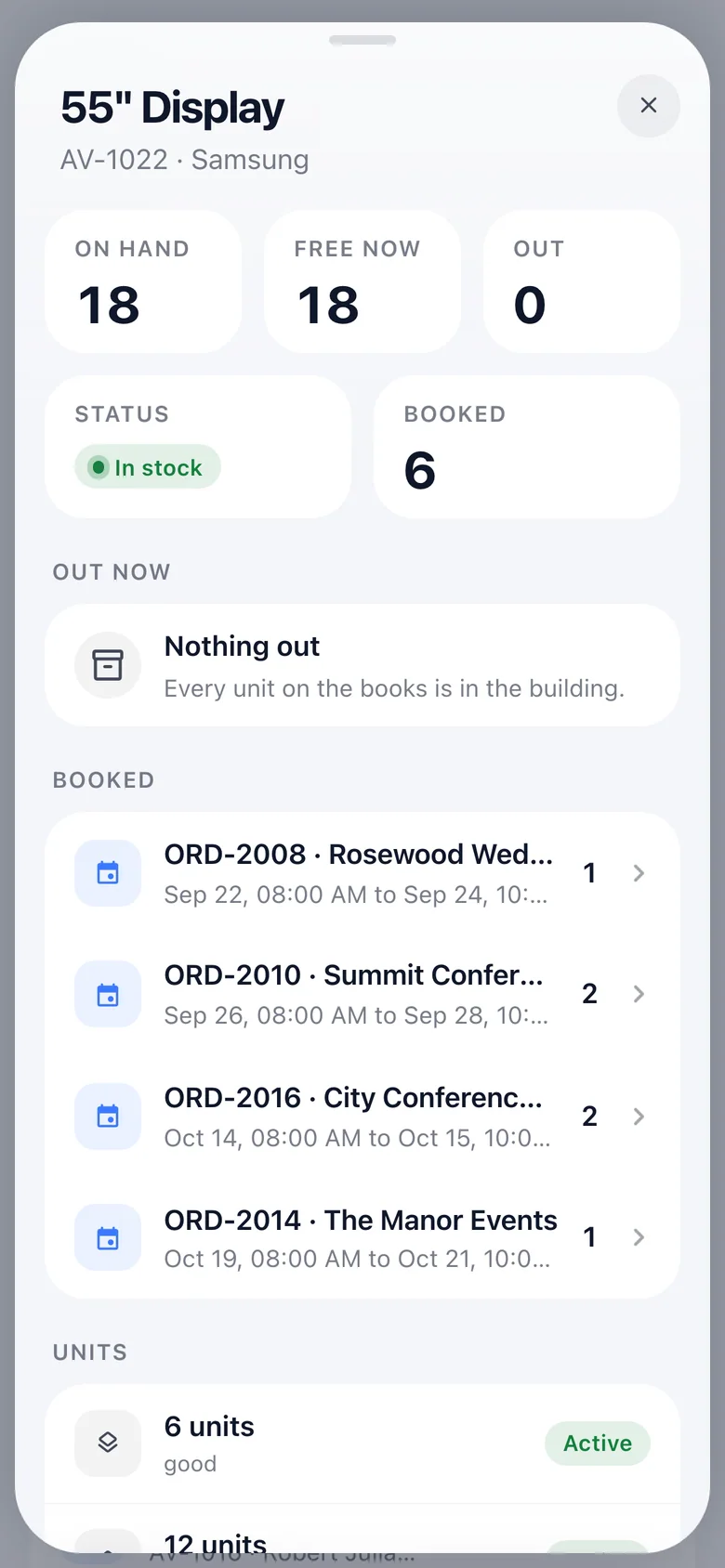
A catalogue item is the thing you rent or sell; stock is the physical units and quantities behind it. LoadOut keeps them distinct, so a 55-inch display can be eighteen bulk pieces at one depot, six serial-tracked units at another and four hired in from a supplier, with one availability figure across all of it.
Serial-tracked or bulk
Units with their own custody and history, or counted quantities, chosen per item.
Variants and kits
White chair against black chair. Kits are built from components, and the buildable quantity comes from the scarcest one.
Containers
Cases with an identity and verified contents that stay packed between jobs and load as a single scan.
Value on the books
Fleet and retail value, purchase cost, and the replacement cost for the day something does not come back.
One record for the whole job.
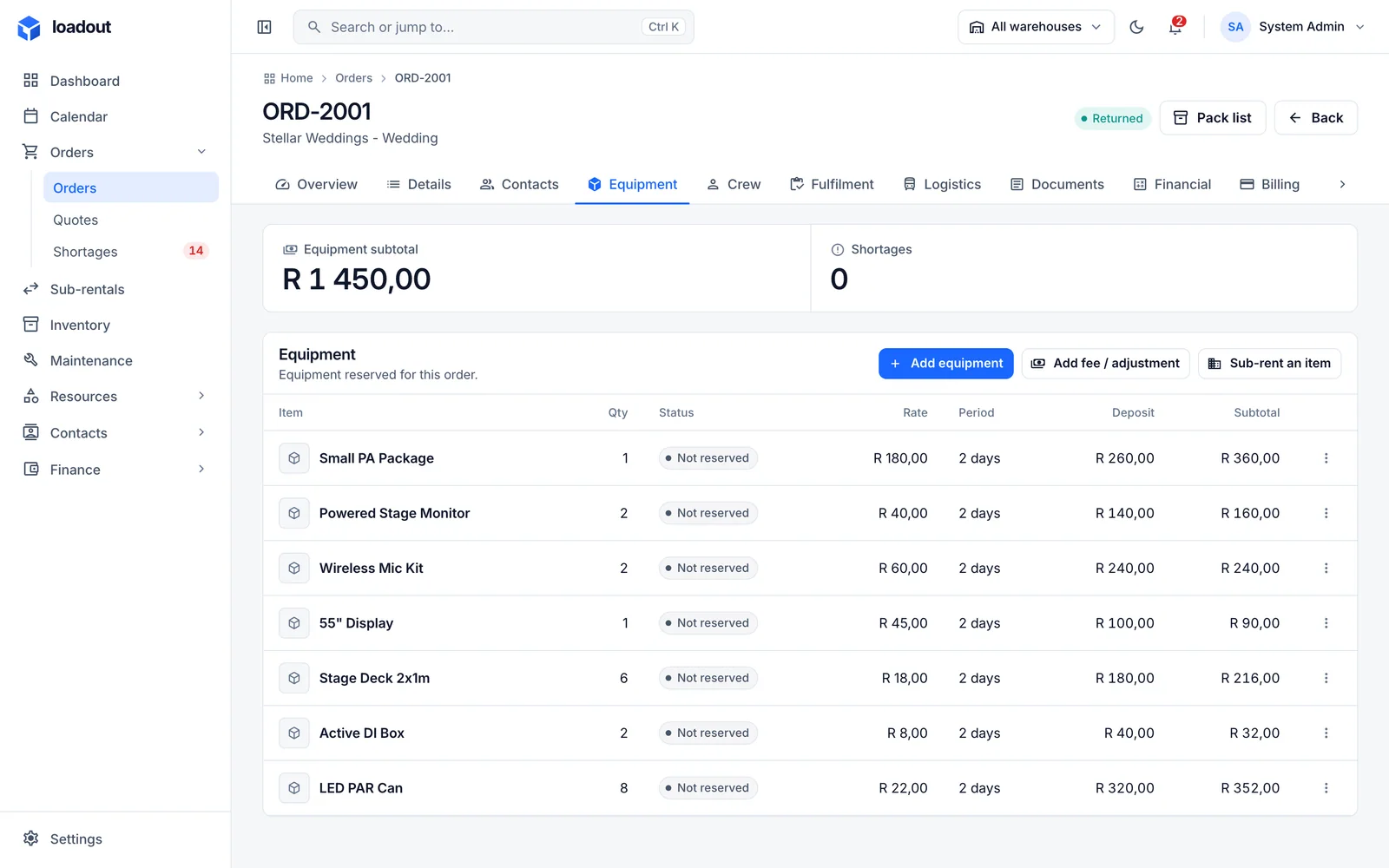
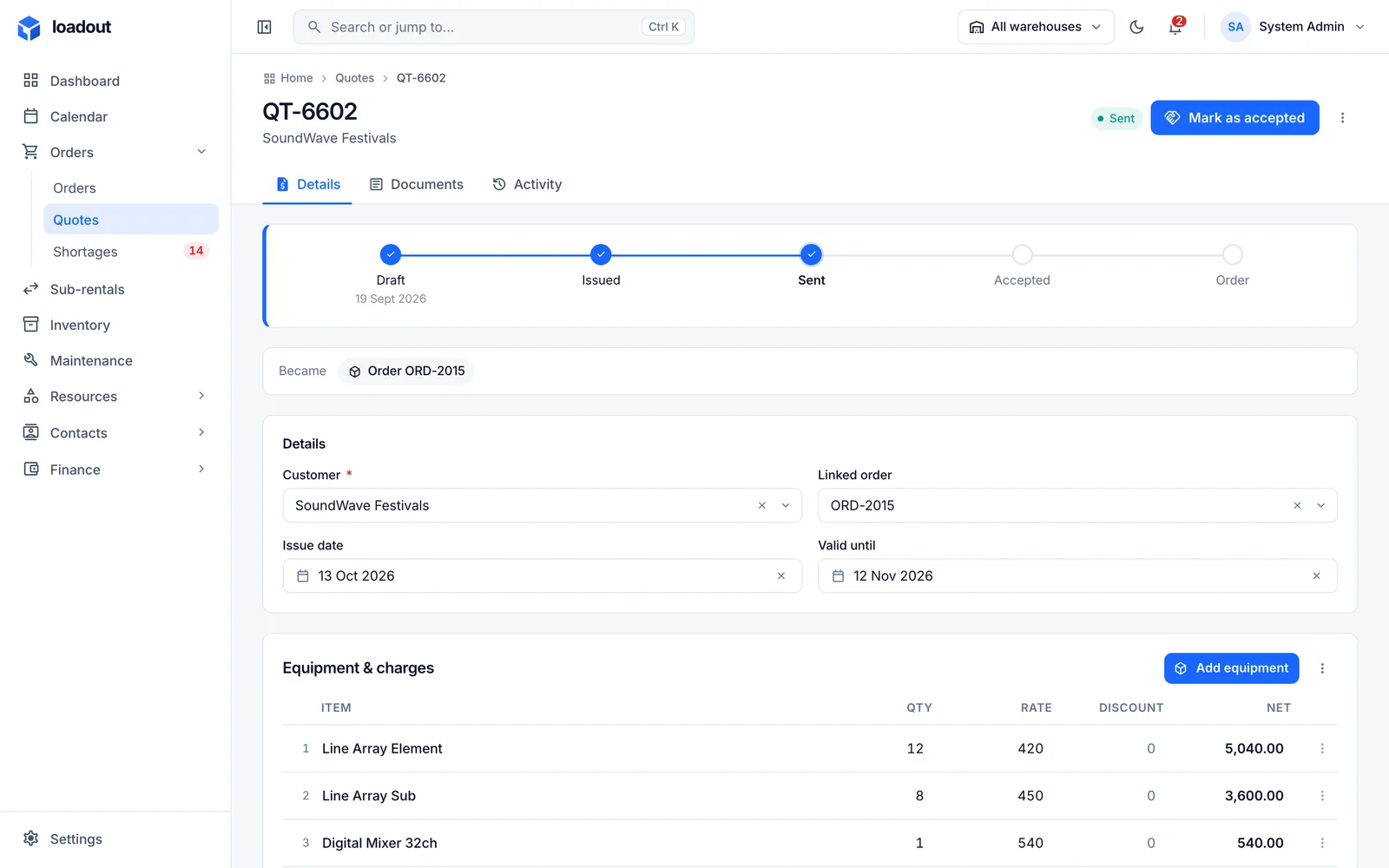
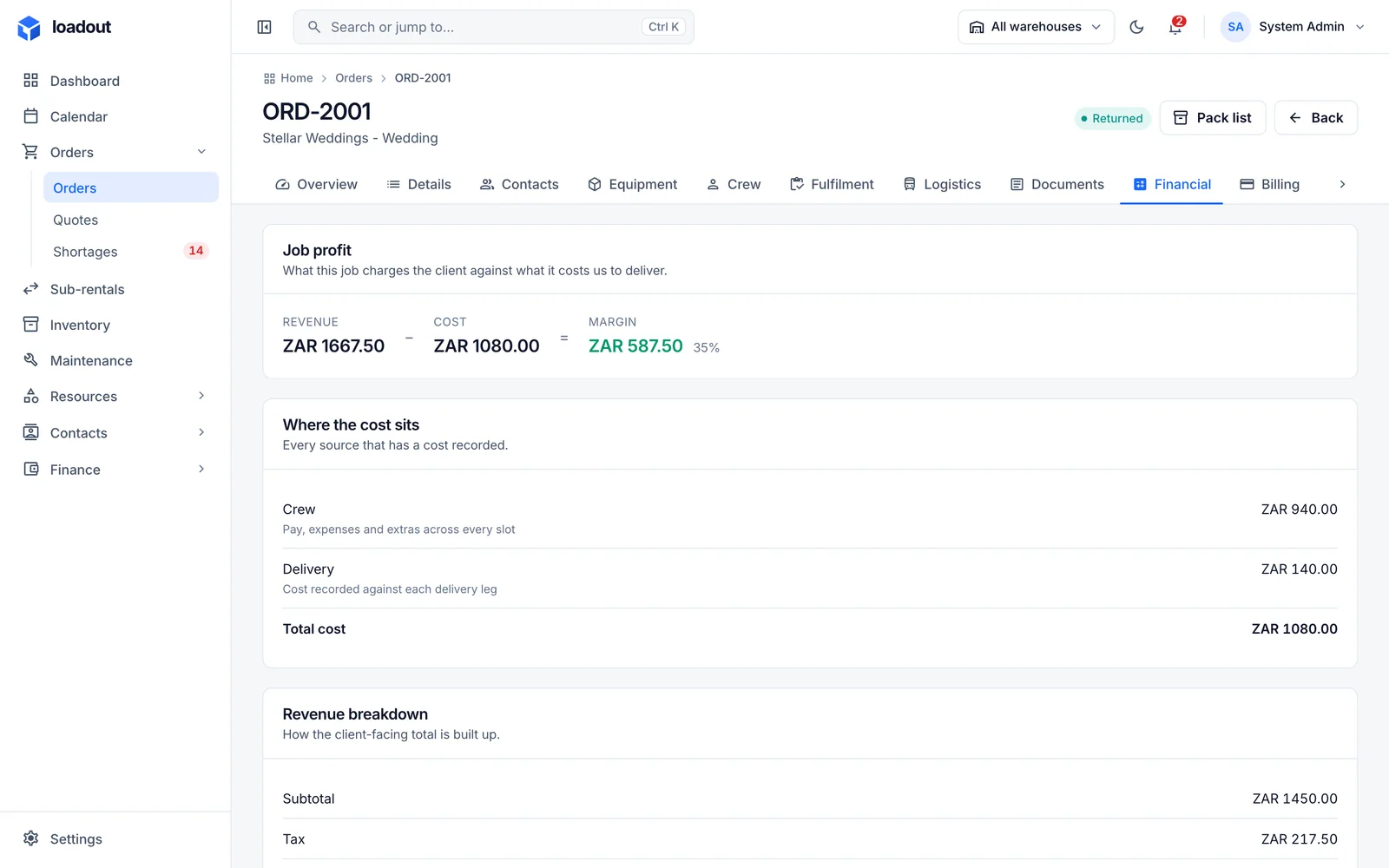
Rental, event, sale or installation: an order carries its lines, crew, transport, documents and money as tabs on the same page. The quote is a versioned, customer-facing view of it, and once accepted, the agreement is what both the plan and the invoice follow.
Versioned quotes
An issued version is fixed. A change creates a new version, and acceptance records which one the customer agreed to.
Lines that behave differently
Rental, sale, service and internal-use lines each do their own work, and only stock lines create demand.
A workflow with stock effects
Confirm, prepare, check out, return, complete. Each step runs the availability engine rather than setting a status field.
Pack lists and documents
Generated from the same lines the warehouse picks from, then sent and tracked from the order.
Calculated over a window, never read off a shelf.
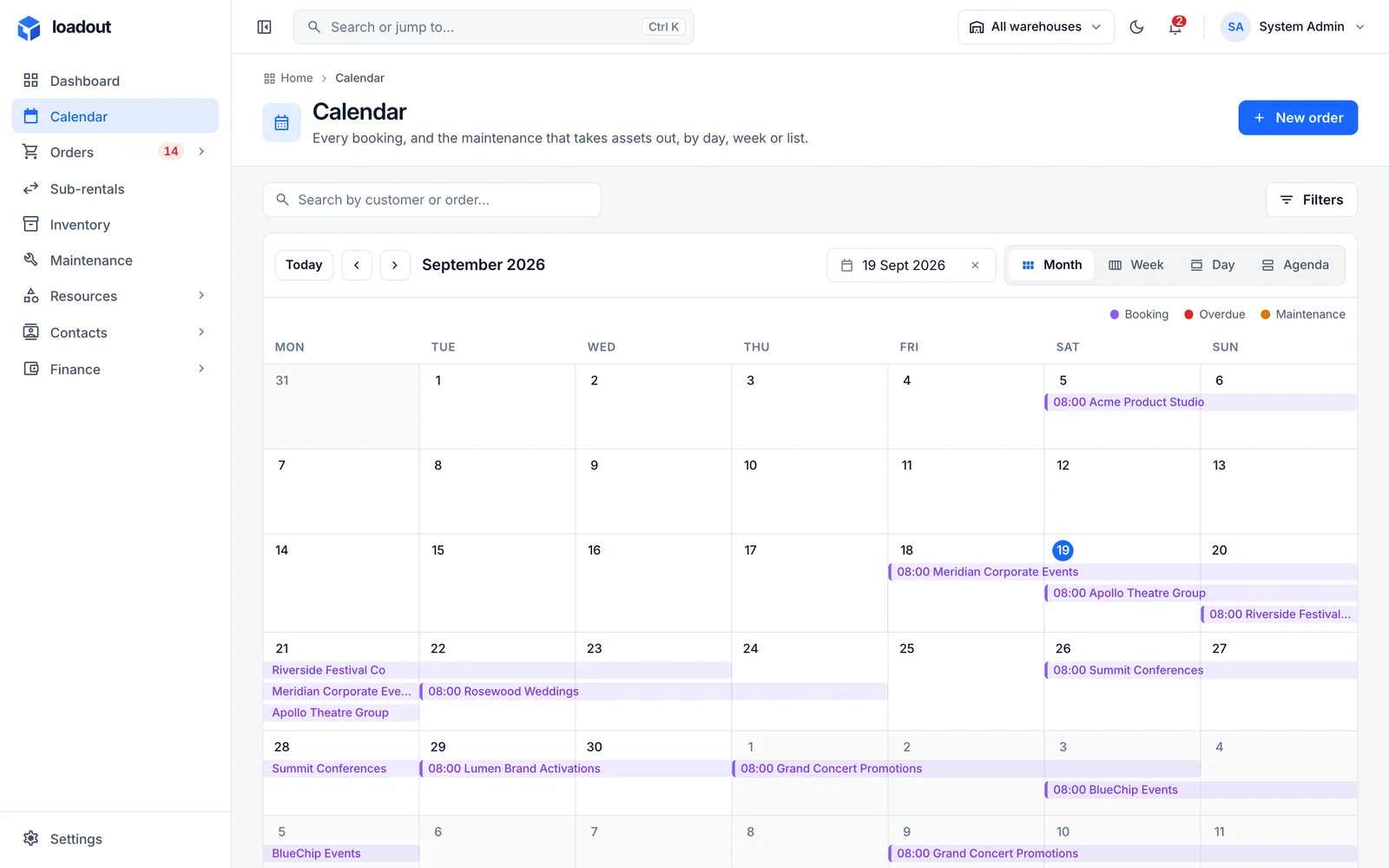
Availability is the quantity that can cover a whole operational window (preparation, transport out, the job, transport back and turnaround) after existing reservations and maintenance holds. Because it is a calculation, it is honest about the Thursday between two Friday jobs.
Soft and hard reservations
A quote marks intent; confirmation hard-reserves. Taking another order's soft stock is an explicit, notified choice.
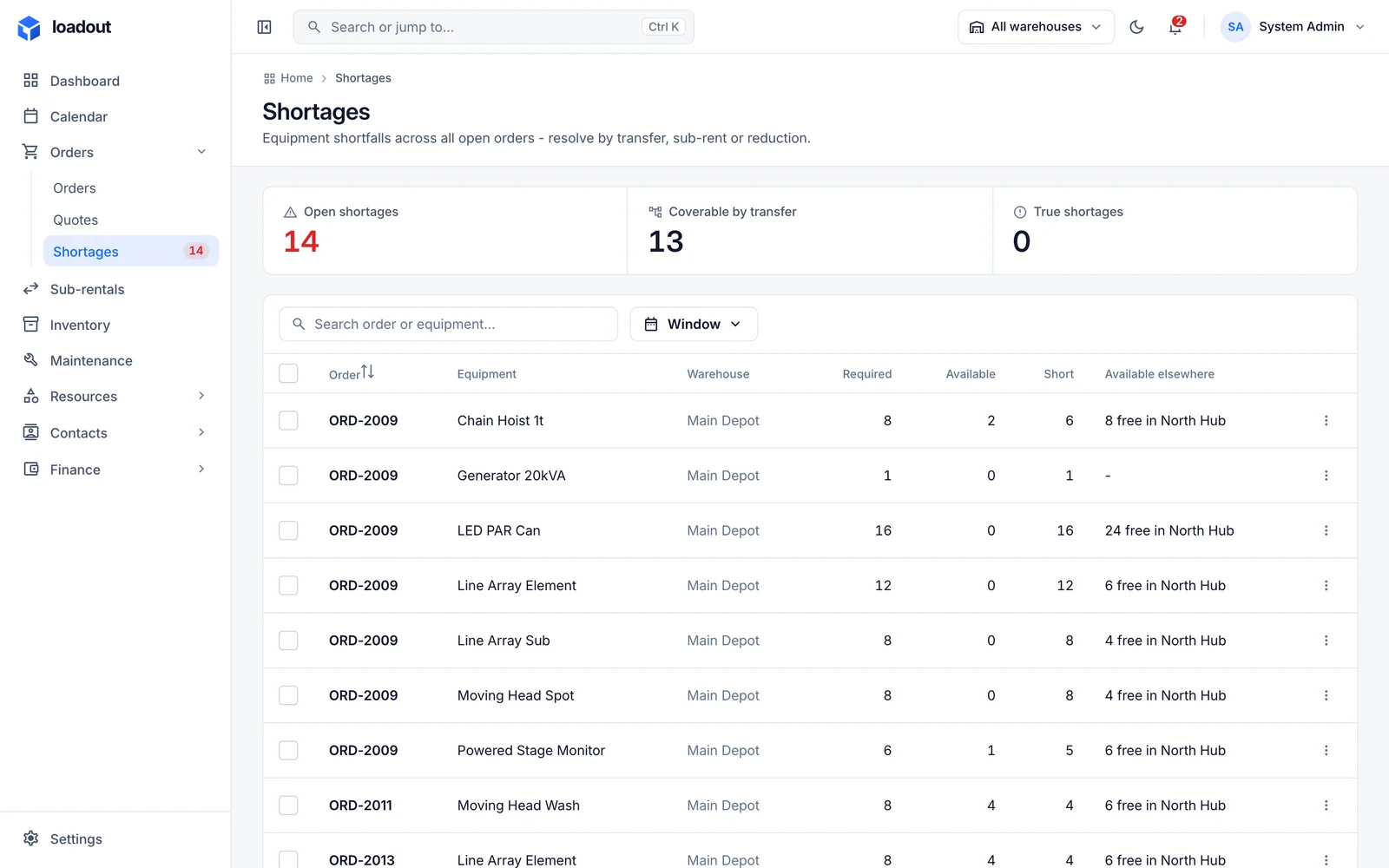
Shortages that say which kind
Coverable by a transfer from another depot, or genuinely short, with the depot that has stock named on the row.
Three ways to cover
Transfer, sub-rent, or swap for an alternative. Always an explicit decision, never a silent substitution.
Sub-rentals with a state machine
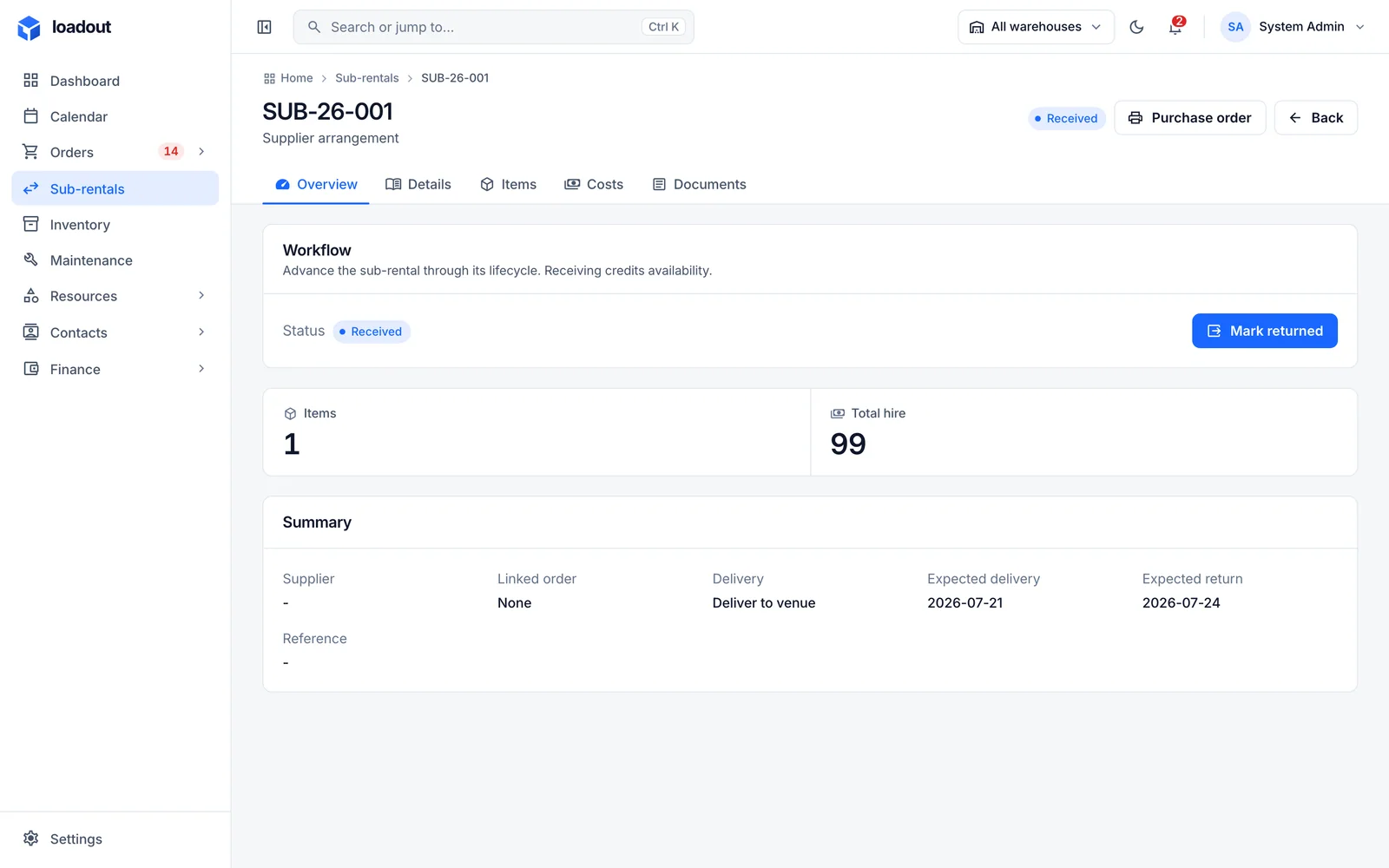
Expected and actual return dates, cost basis, sell rates and purchase orders for equipment hired in.
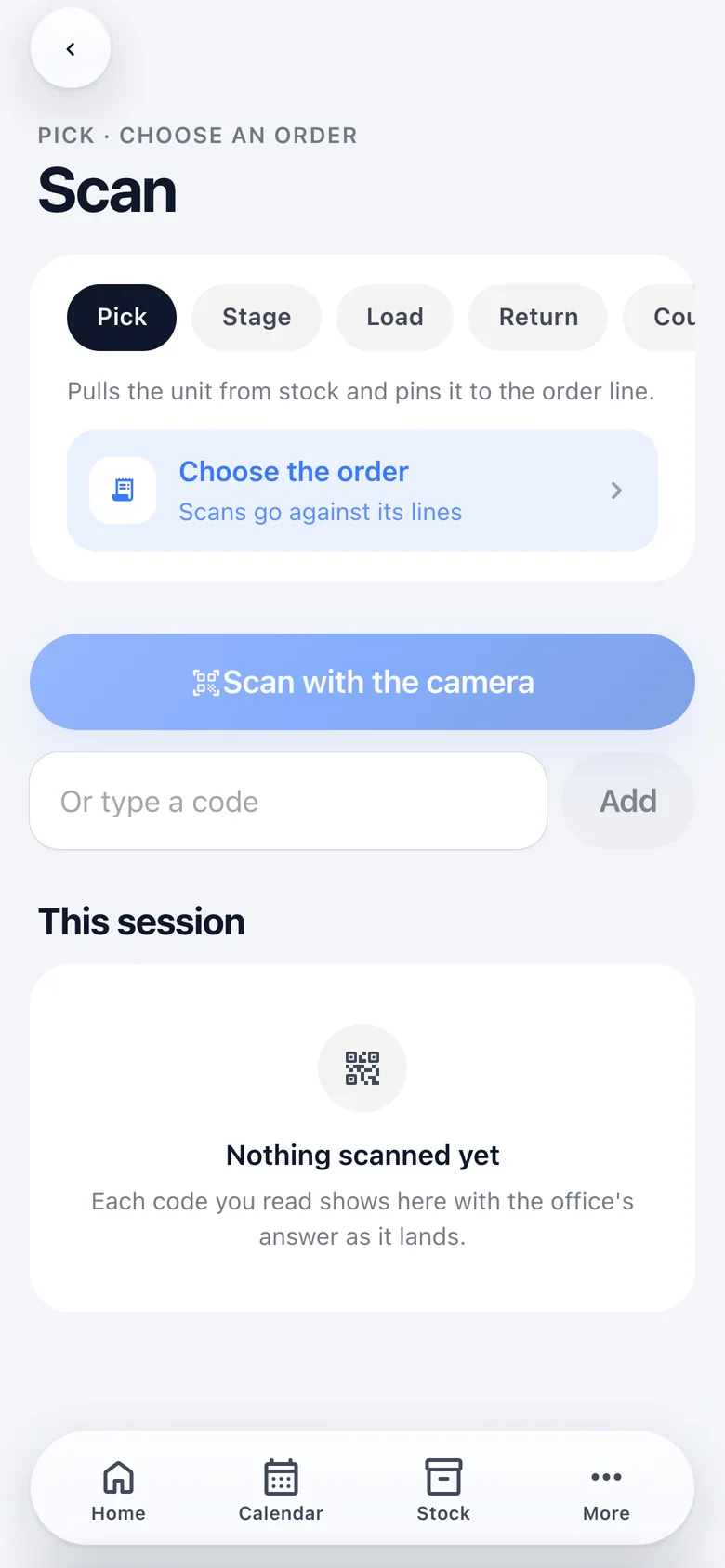
Everything else is a view over the scan.
Pick, stage, load, return and count are scans against an order. Each read receives the office's verdict as it lands (done, already scanned, not on this order, unknown, blocked), and a case whose contents were verified loads as one scan without being opened.
Barcode and RFID
The phone's camera, a handheld, or a typed code. The scan event is the same whichever produced it.
Offline first
Scans are written to the device before they are sent. A device-minted id makes every replay safe.
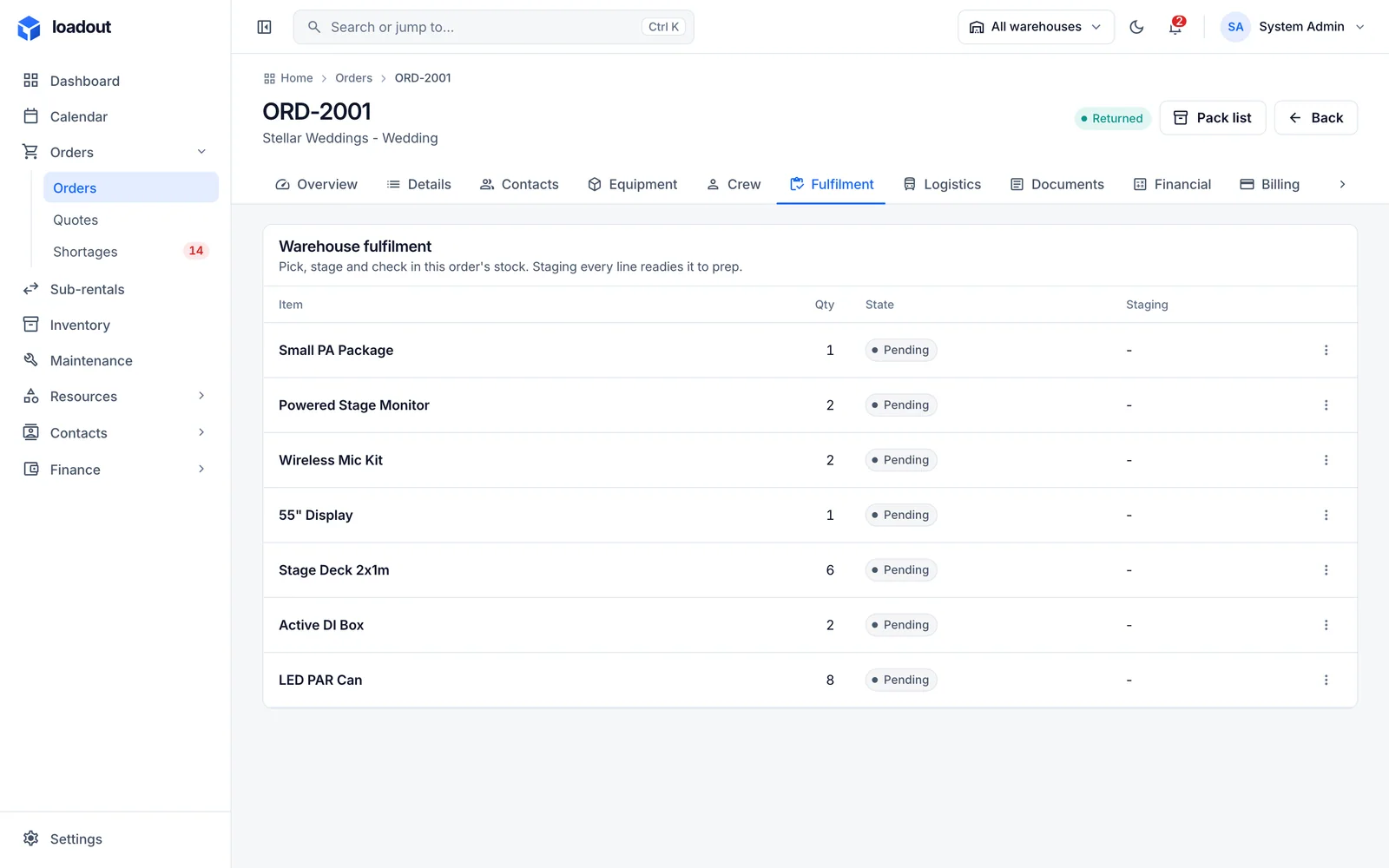
Fulfilment per line
Picked, packed, checked and loaded are counted per stage, never added together.
Return in three facts
Collected, received, cleared for use. Nothing is back on the shelf until it has been checked.
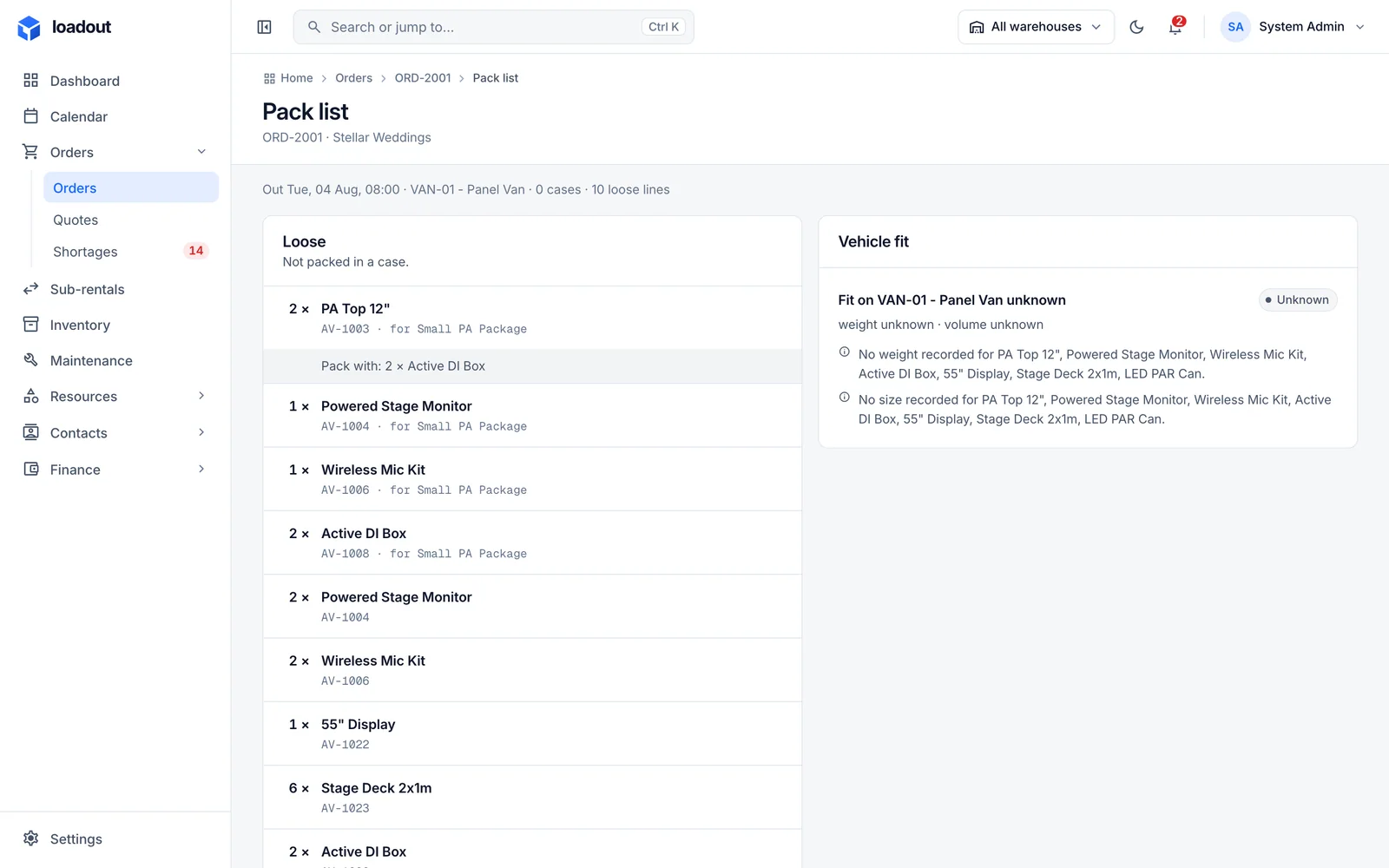
Planned by the office. Captured by the driver.
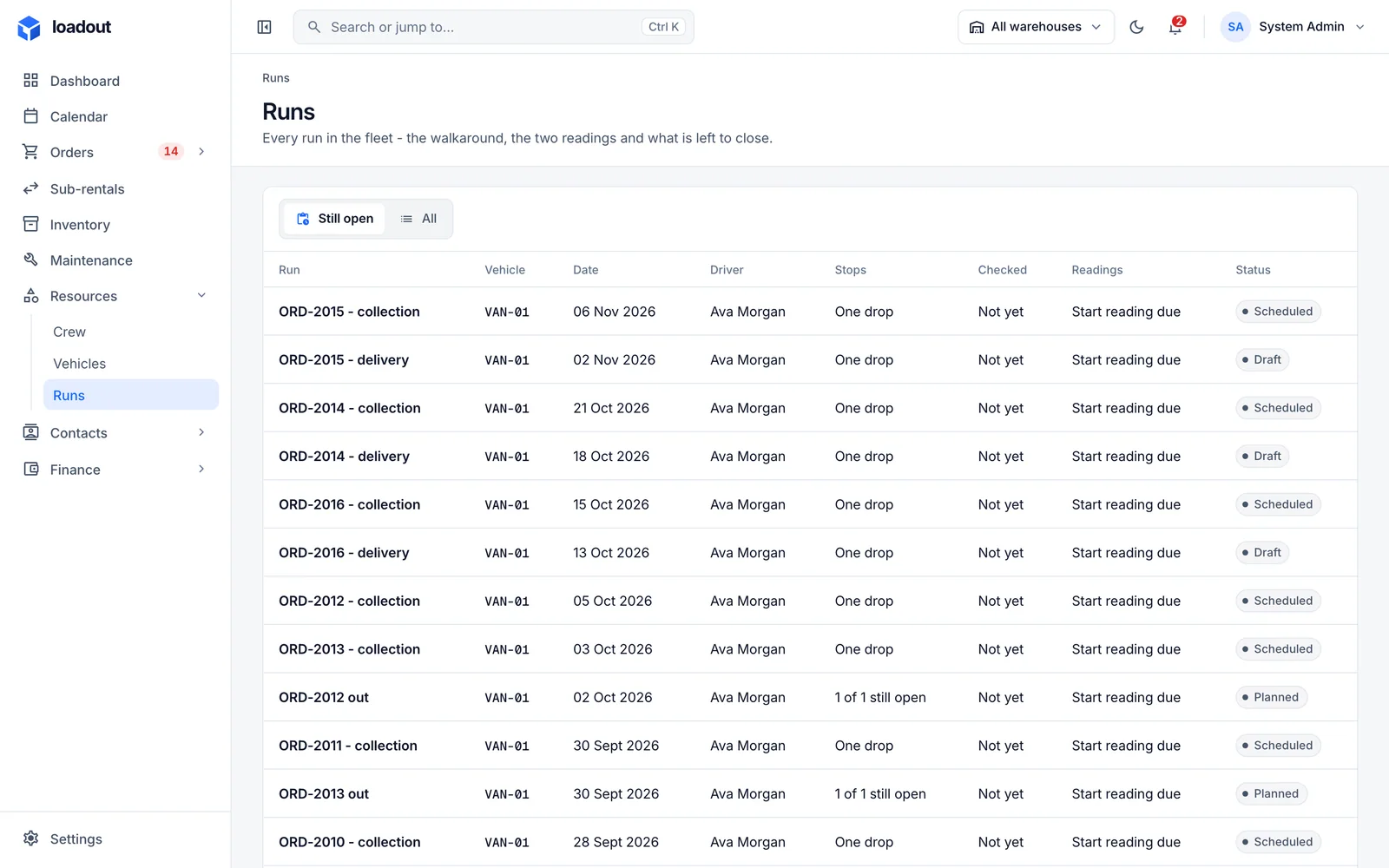
A run is a vehicle, a driver and ordered stops serving one or several orders. The office plans it; the driver works it on the phone in the order it happens, from walkaround and opening reading to each drop, the closing reading and the refuel, and the office sees every capture as it lands.
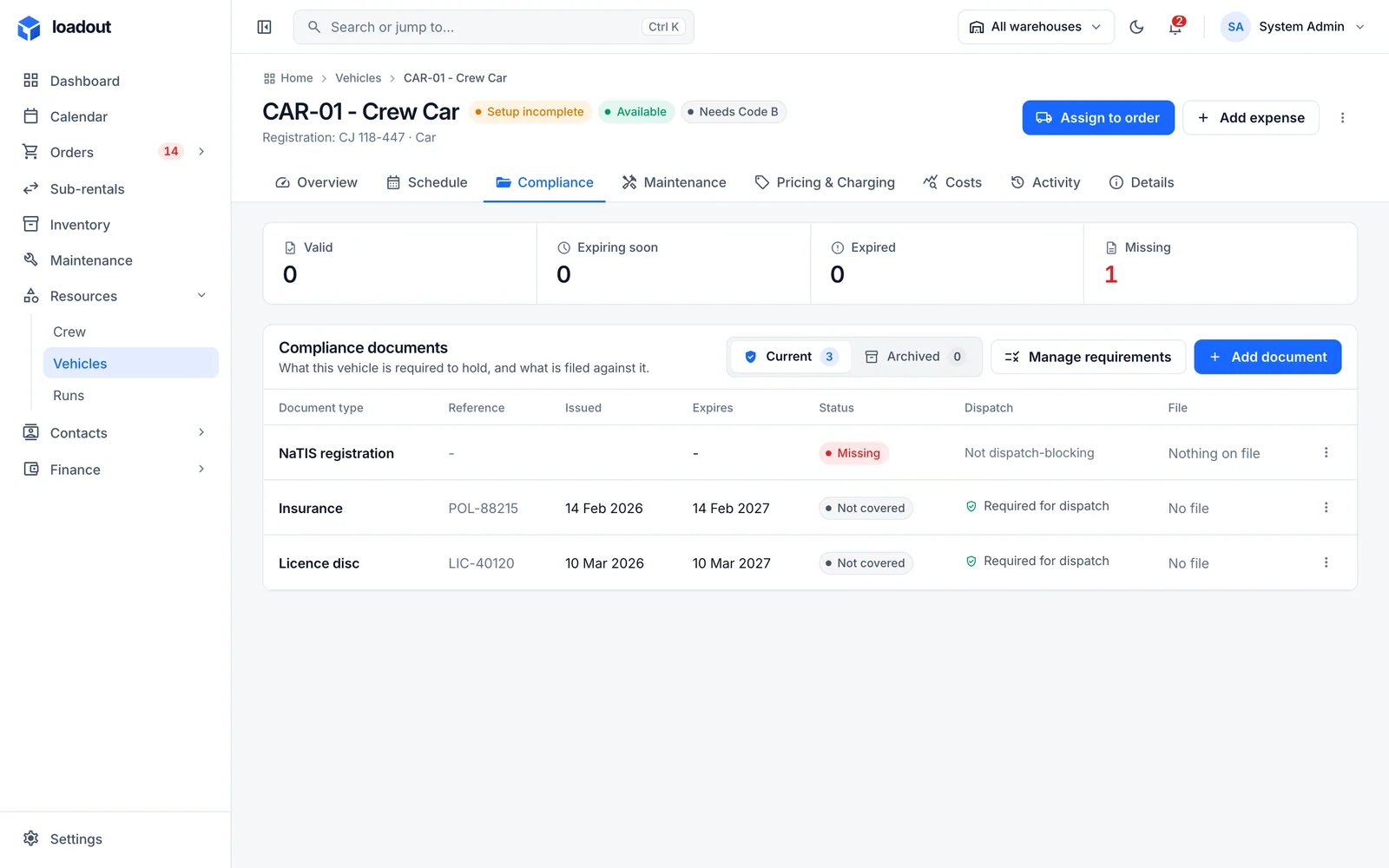
Compliance you define
Each organisation names its own vehicle document types (licence disc, certificate of fitness, MOT) and which vehicle types each applies to.
Who can drive it
Licence classes and professional permits on the person; the vehicle knows what it requires.
Odometer and cost per job
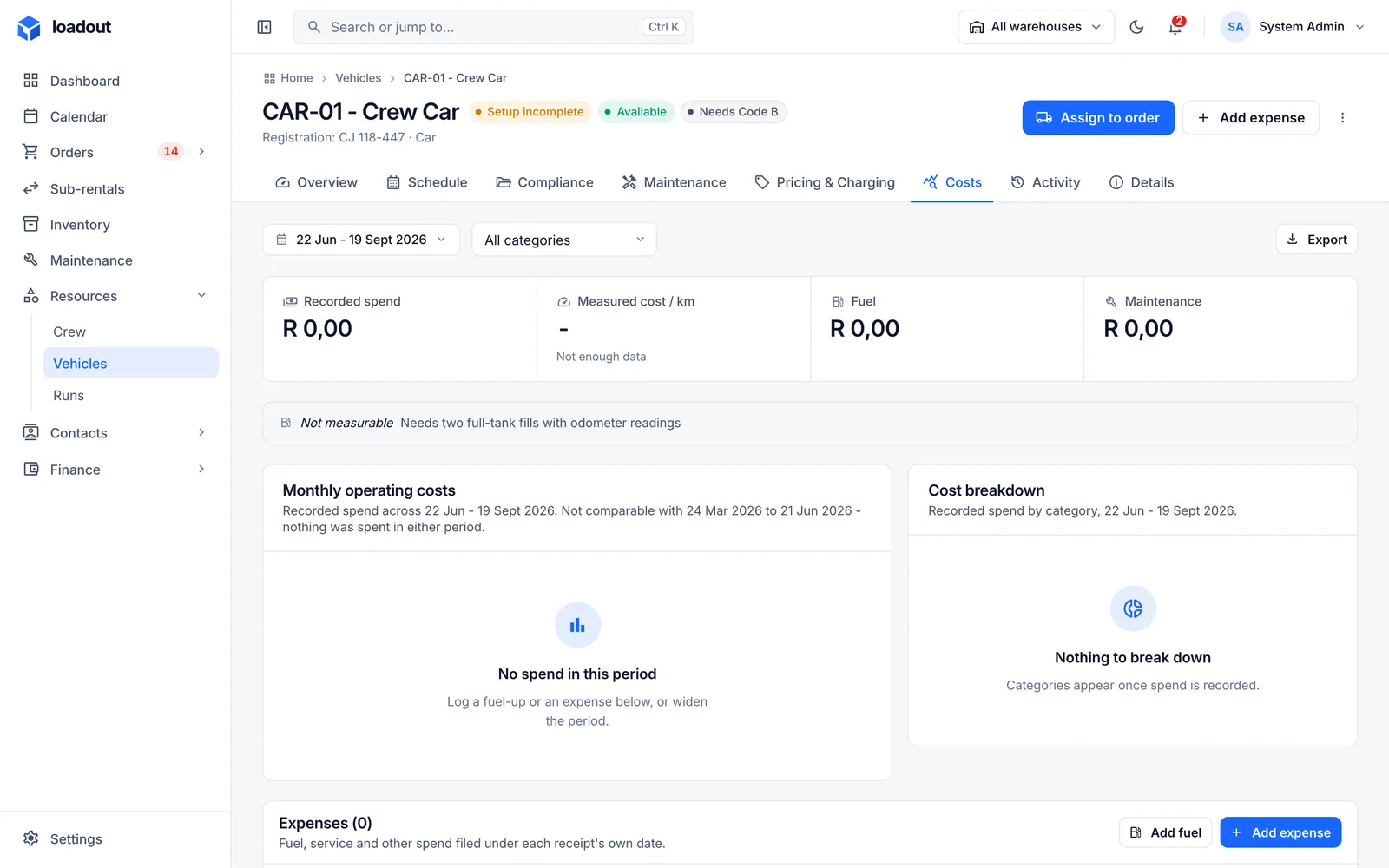
Readings bracket each run. Distance is allocated to the orders it served, and the cost lands on their margin.
Outcomes, not ticks
Delivered, partial or failed, with who signed, the time, and the reason a drop did not go.
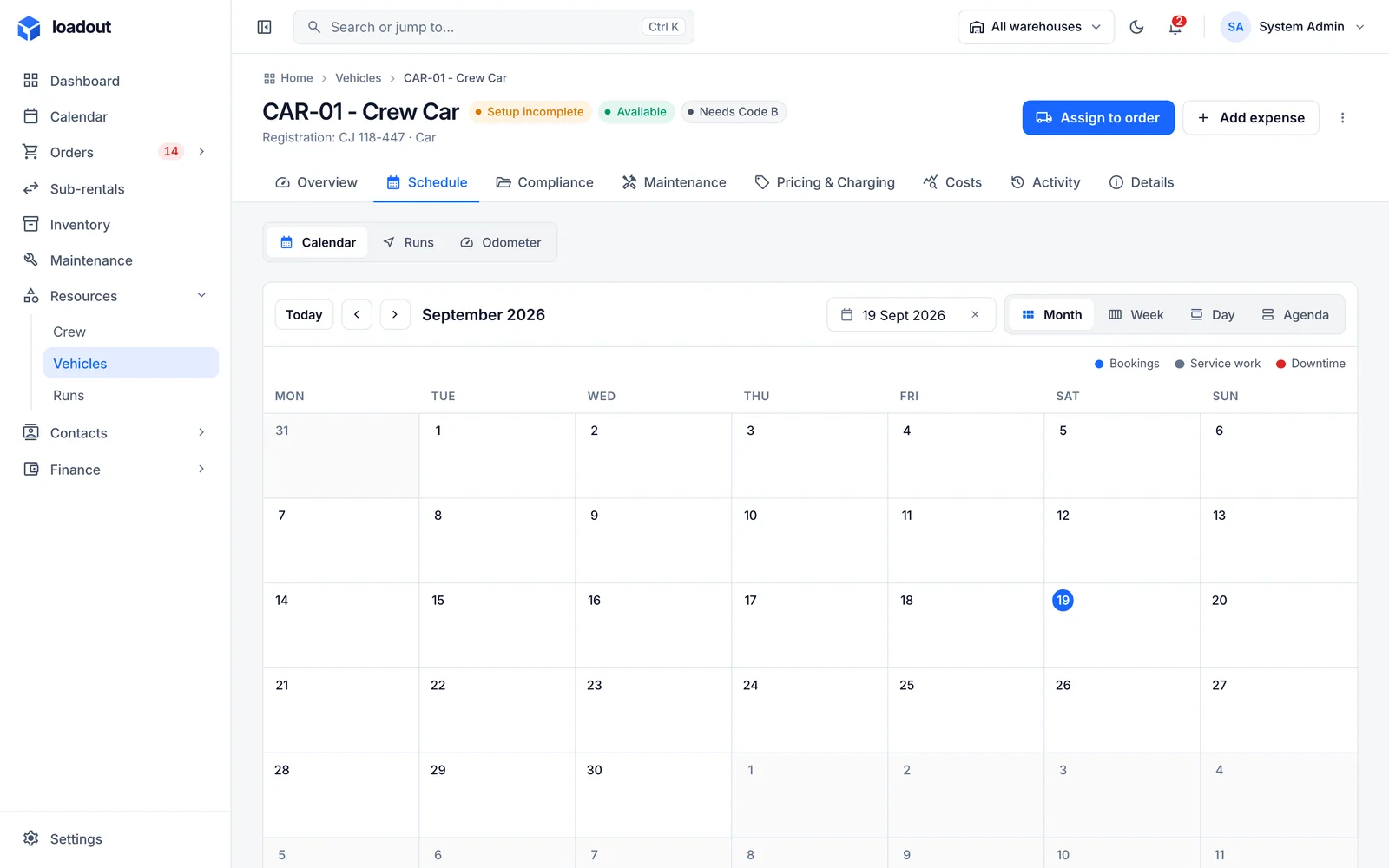
People, shifts, and what they are actually owed.
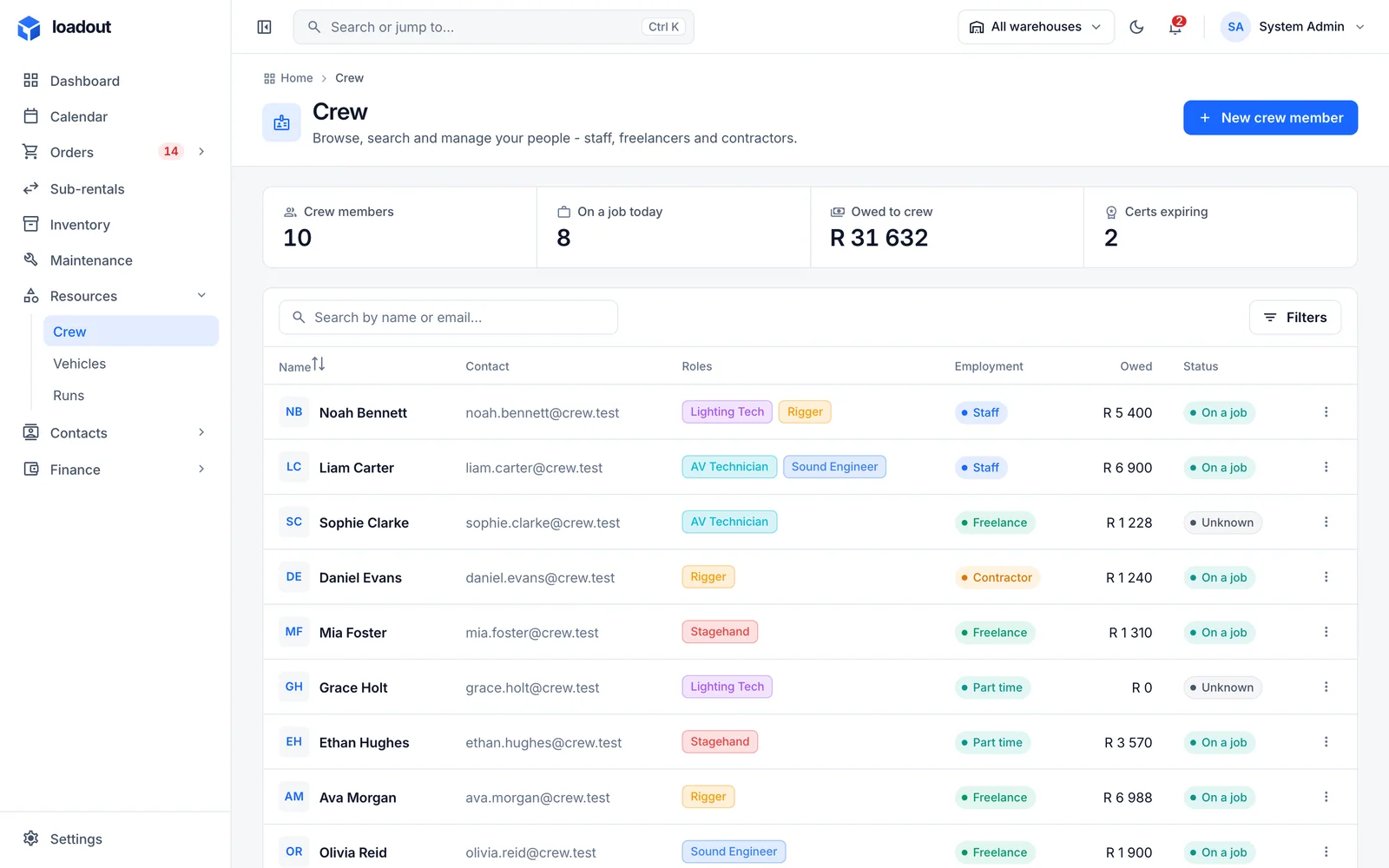
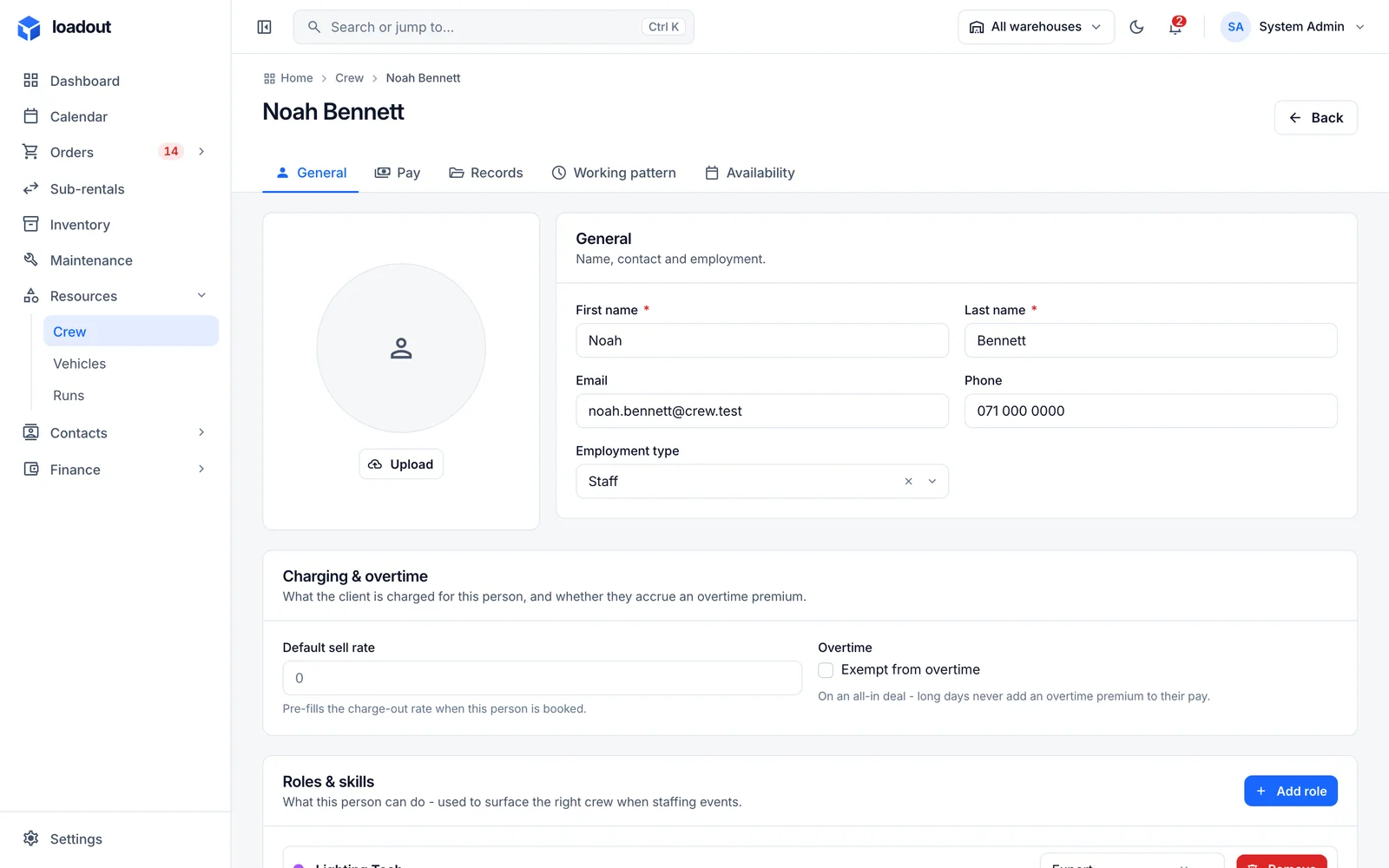
A person may be an employee, a freelancer or a contractor, and may drive, rig and do warehouse work in the same week. Shifts are set by work role and headcount; assignments are tentative until conflicts clear and confirmed once the person has committed.
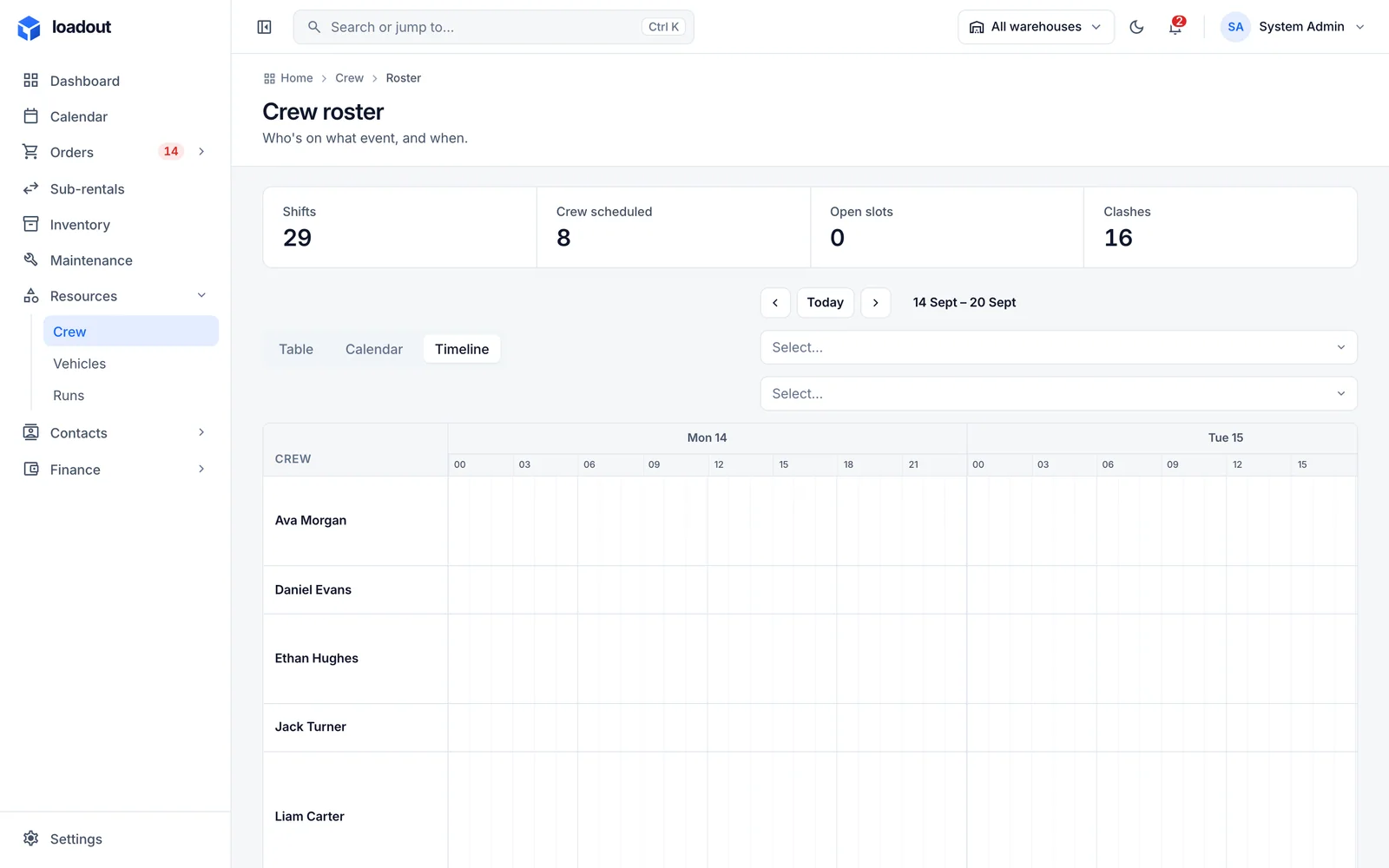
A roster that shows conflicts
Double bookings, travel between sites, and unknown availability shown as unknown rather than assumed free.
Qualifications with expiry
Certificates that need verifying before they satisfy a mandatory requirement, and a warning before they lapse.
Overtime from actuals
Attendance, breaks and waiting recorded once; pay rules derive the overtime. Never from what the customer was billed.
Their day, on the phone
Shifts and runs in time order, with directions to the site and a tap into the job.
A hold is released by clearance. Nothing else.
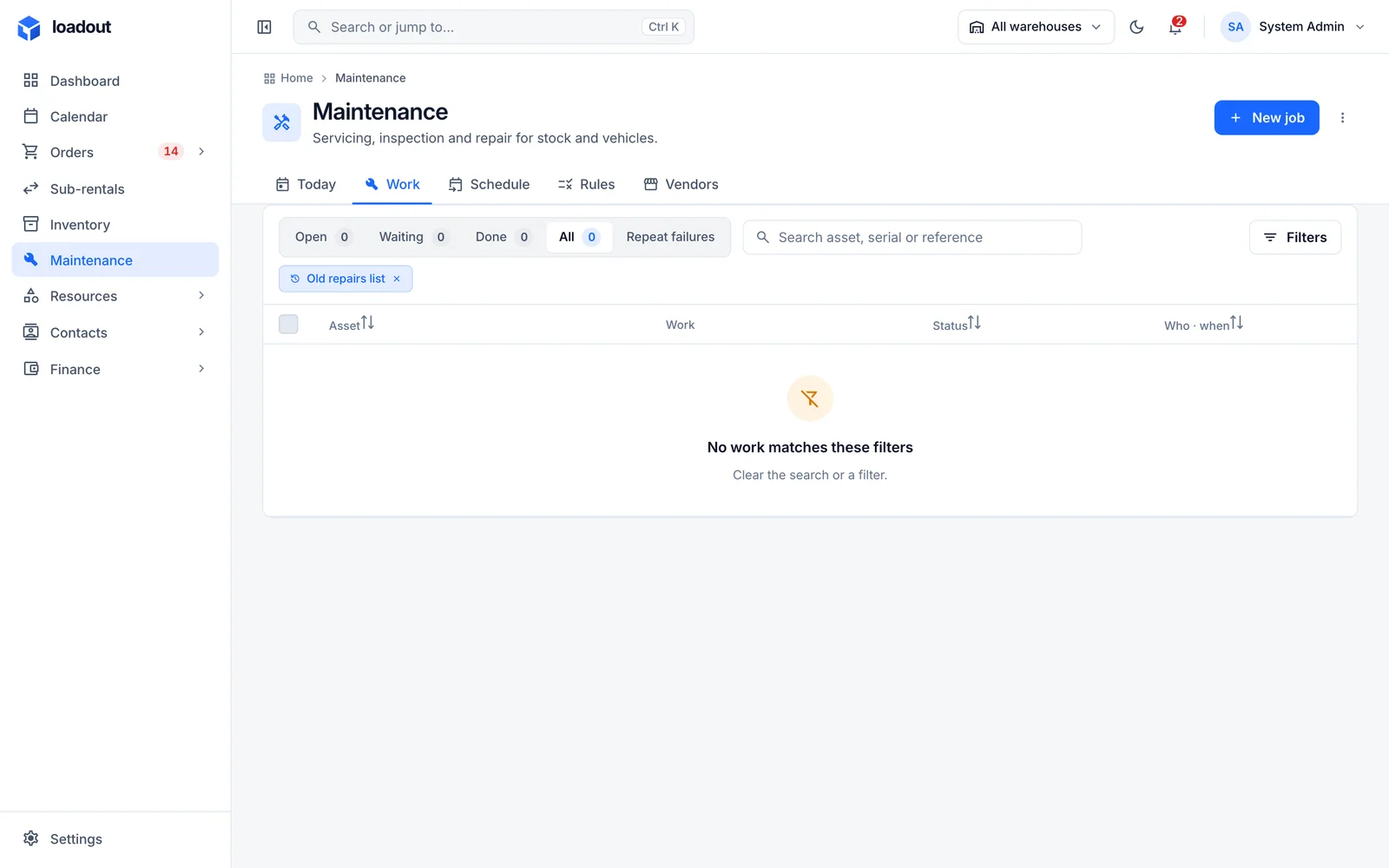
A failed check, reported damage, a due service or an external repair places a maintenance hold on a unit. The hold survives the item turning up, the repairer's report and the date passing; it is released only when a permitted person clears the item for use.
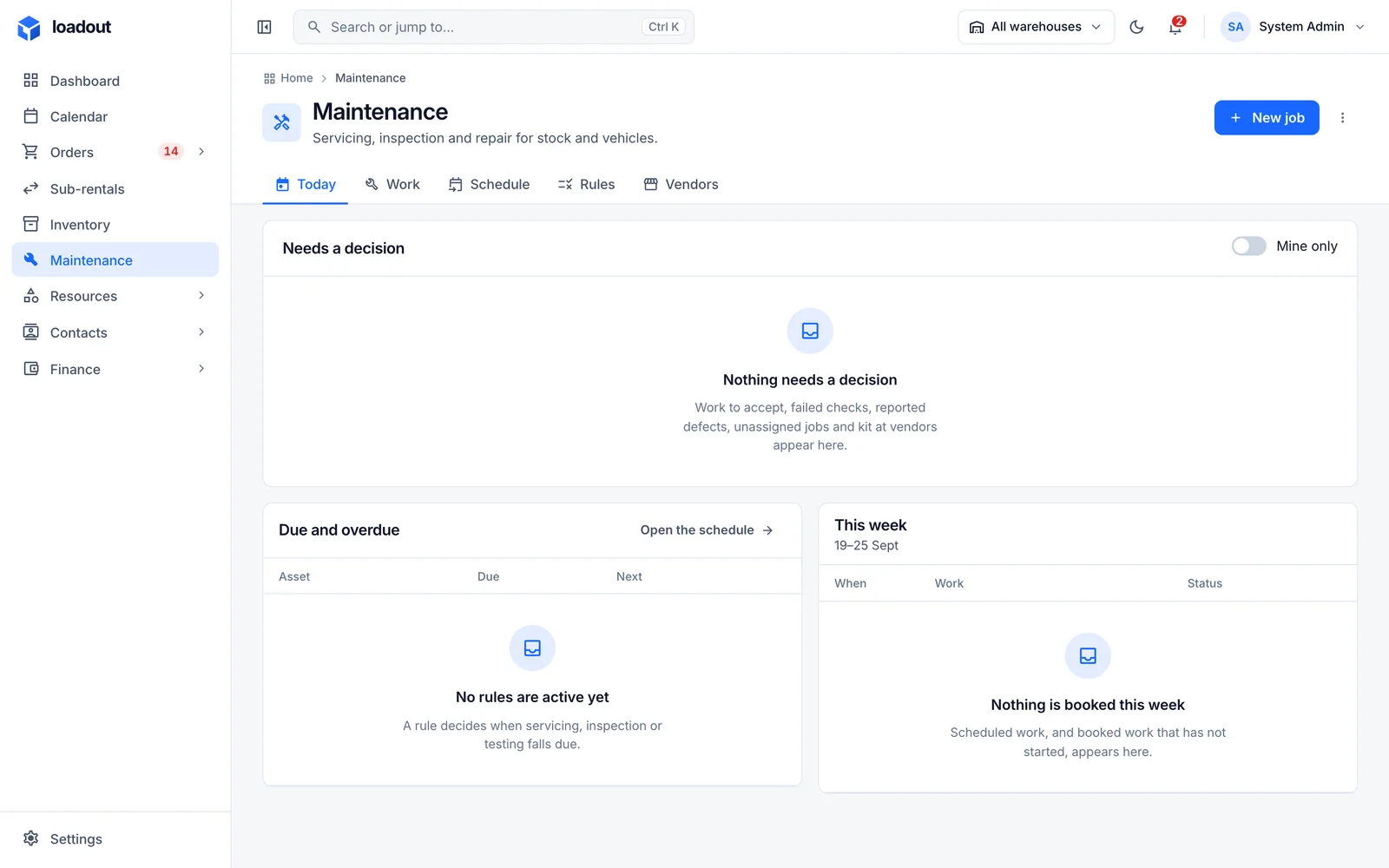
Equipment and vehicles alike
One maintenance model for a moving head and a panel van.
Rules with real counters
Due after a number of rentals, hours on hire, meter hours or distance, counted from actual events rather than billed quantities.
Bounded deferrals
A permitted, recorded postponement that neither resets the counter nor pretends the work was done.
Return checks
Checklists by category run at check-in, and a failed check creates the requirement automatically.
From the agreed charge to the money in the bank.
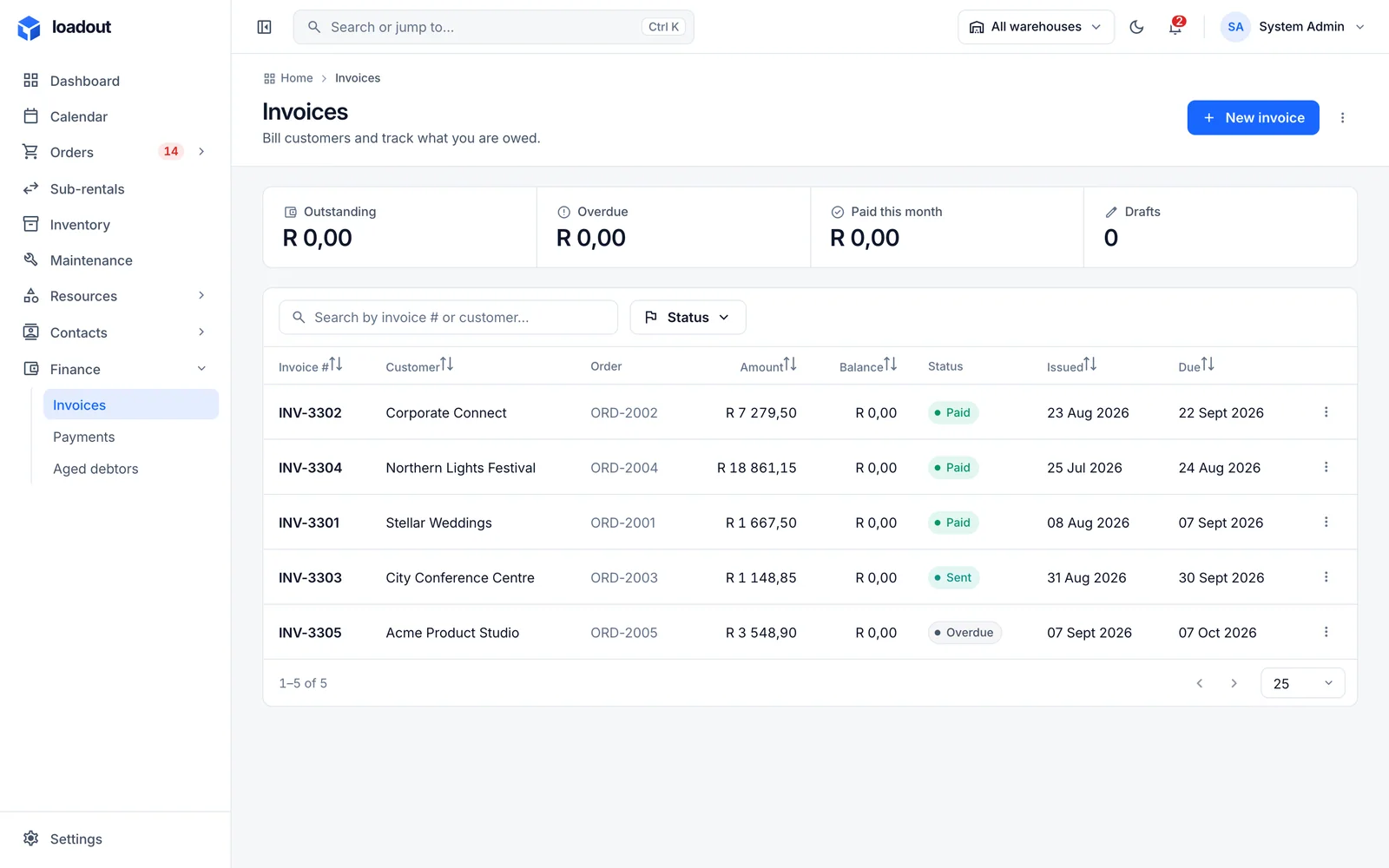
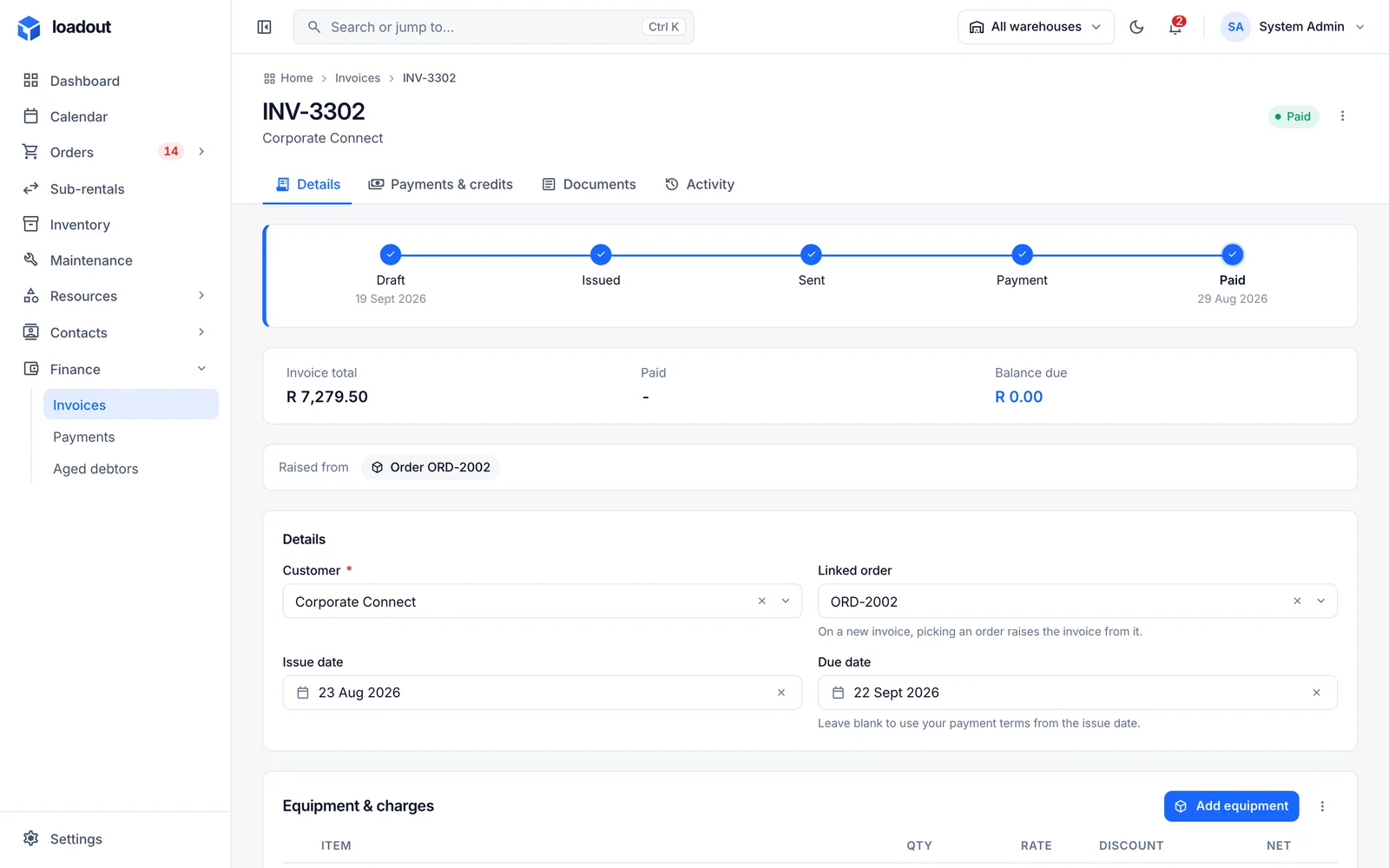
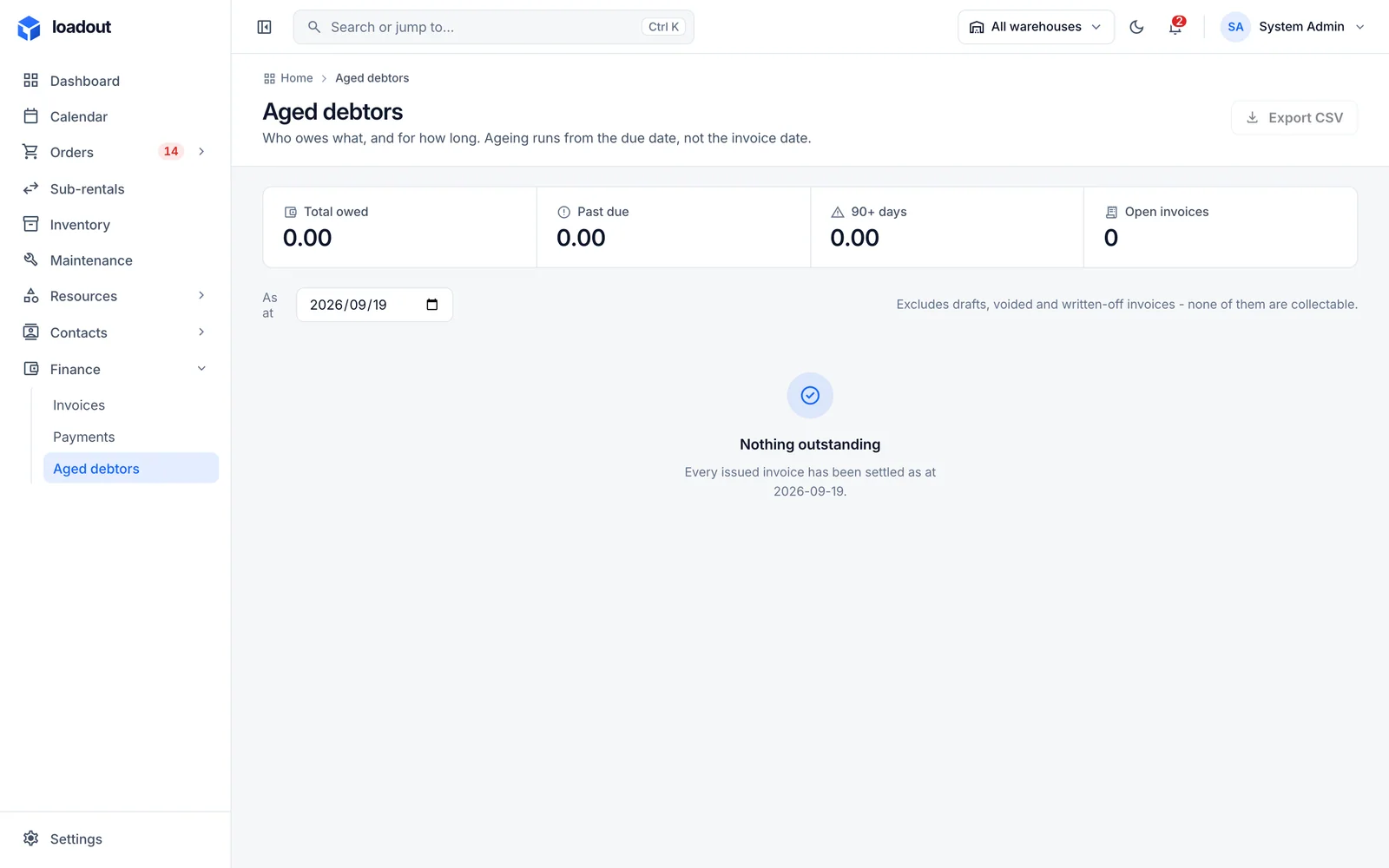
Invoices are issued from charges that are ready, and charges follow the agreement: an overrun on site never becomes a line on the invoice by itself. Payments, allocations, credit notes and refunds are separate facts, so the balance is always explainable.
Invoices, payments, credit notes
With allocation, ageing and statements. Recurring and consolidated invoicing for long hires.
Public customer pages
A quote, invoice or credit note reached from an emailed link, to accept, download, or pay through a gateway.
Advances and refundable security
Both optional on an order, and neither pays an invoice by accident.
Your tax, your currency
Tax rates, pricing mode and document templates per organisation. Nothing assumes one country.
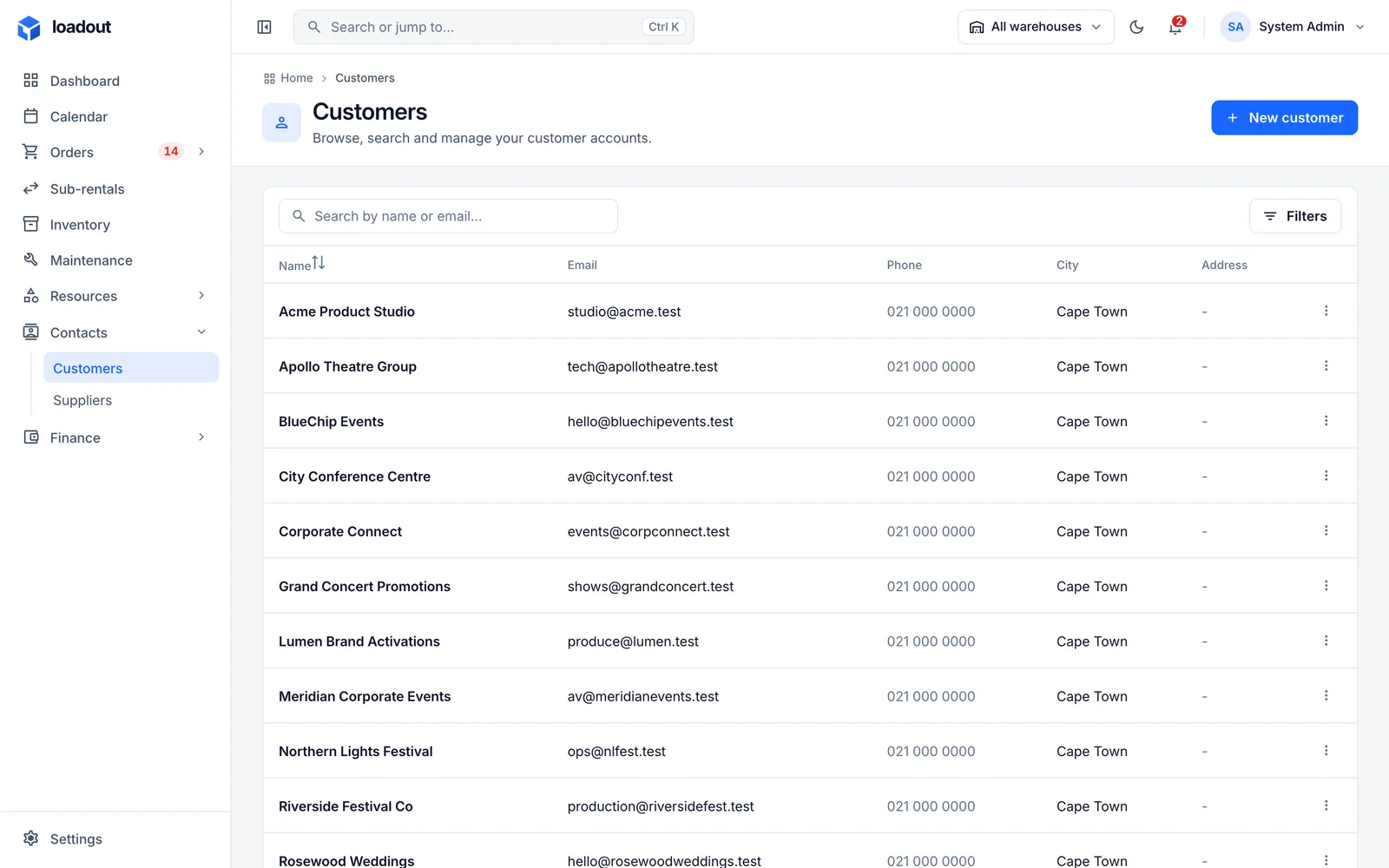
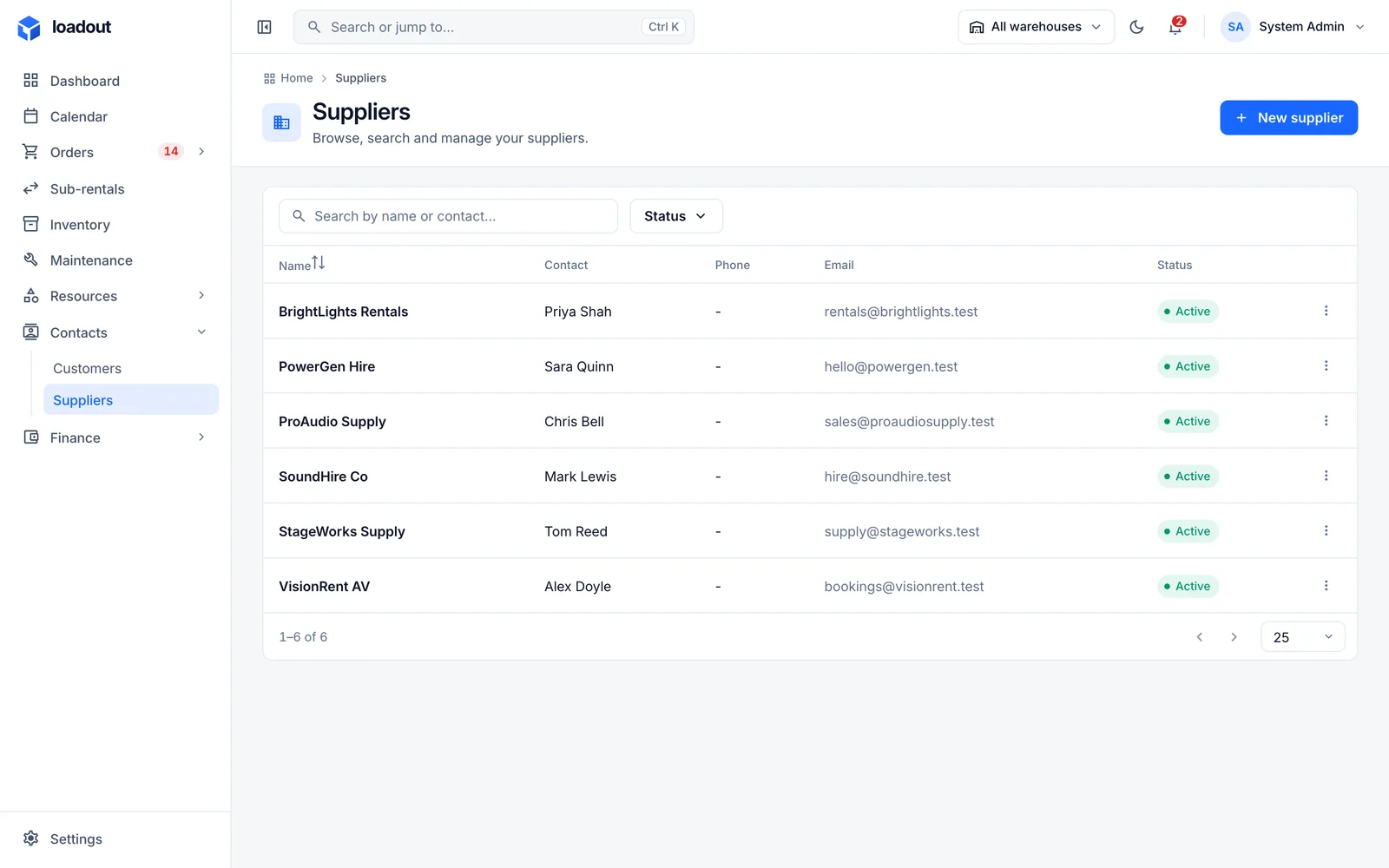
Both sides of the trade.
Customers with contacts, geocoded addresses, an account owner and everything they have ordered, been quoted and been invoiced. Suppliers with the items they can provide, at what cost and lead time, which is what sourcing a shortage reads from.
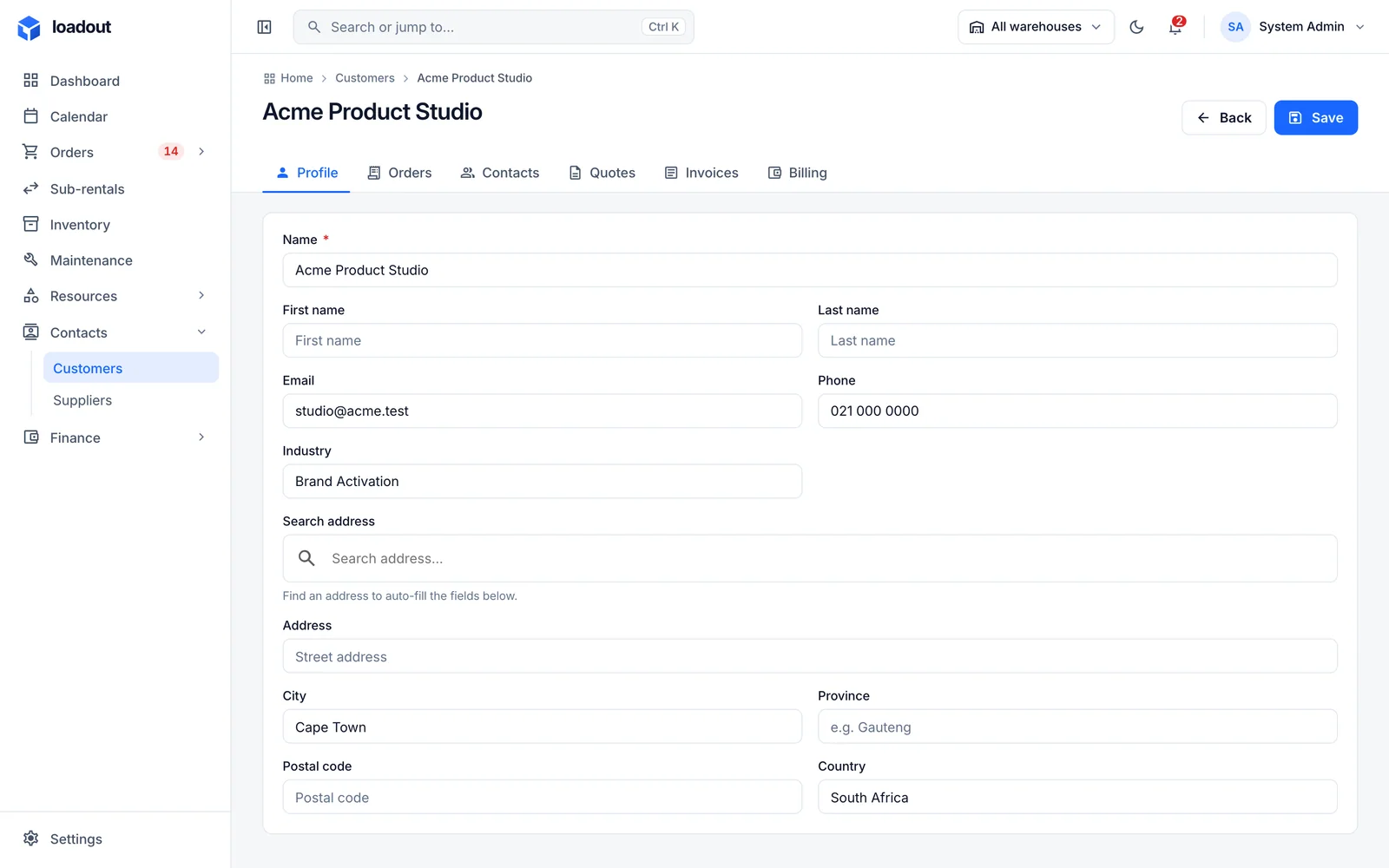
A customer record that answers the question
Orders, quotes, invoices and billing on the customer, rather than three searches away.
Supplier arrangements
Items, cost and lead time feed suggested quantities and sub-rental purchase orders.
Call, email, directions
On the phone, a customer is one tap from a call or the route to site.
Your vocabulary. Your rules. Sensible defaults.
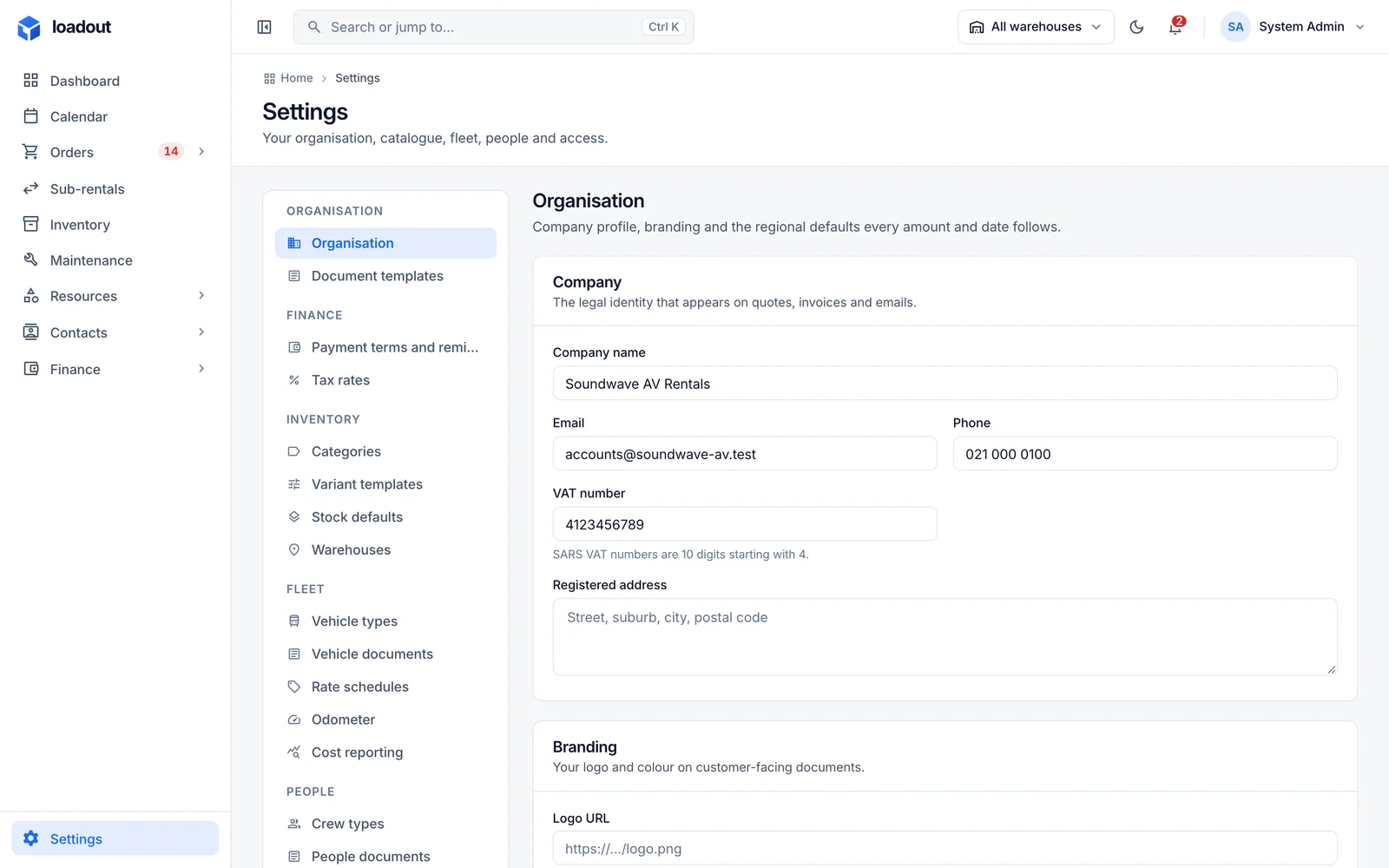
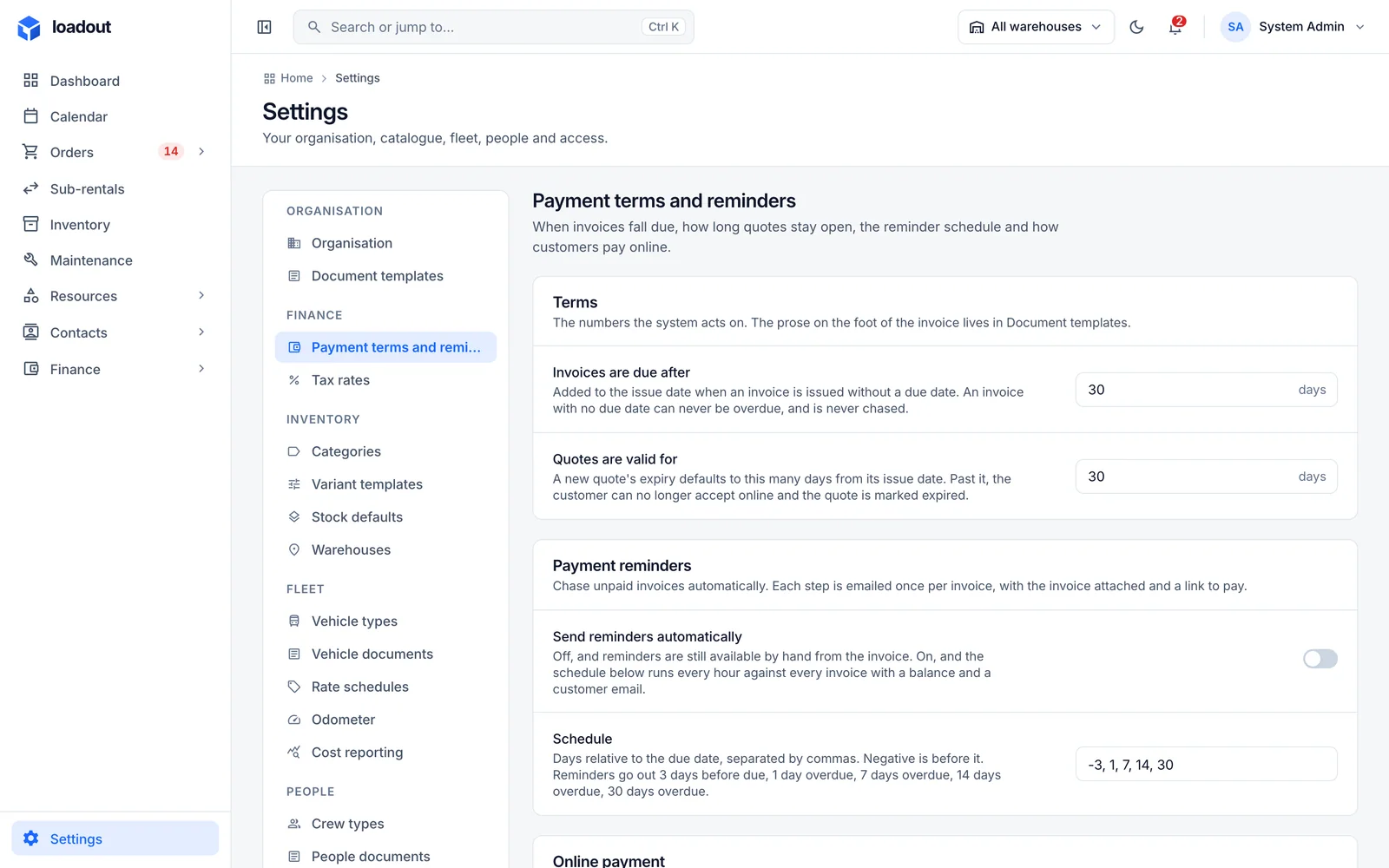
An organisation sets its currency, tax, rental day basis, shortage lead time and release-hold policy once. Vocabulary that varies by country or by business (document types, vehicle types, return conditions, work types, variant templates) is a list you own, not a fixed set we shipped.
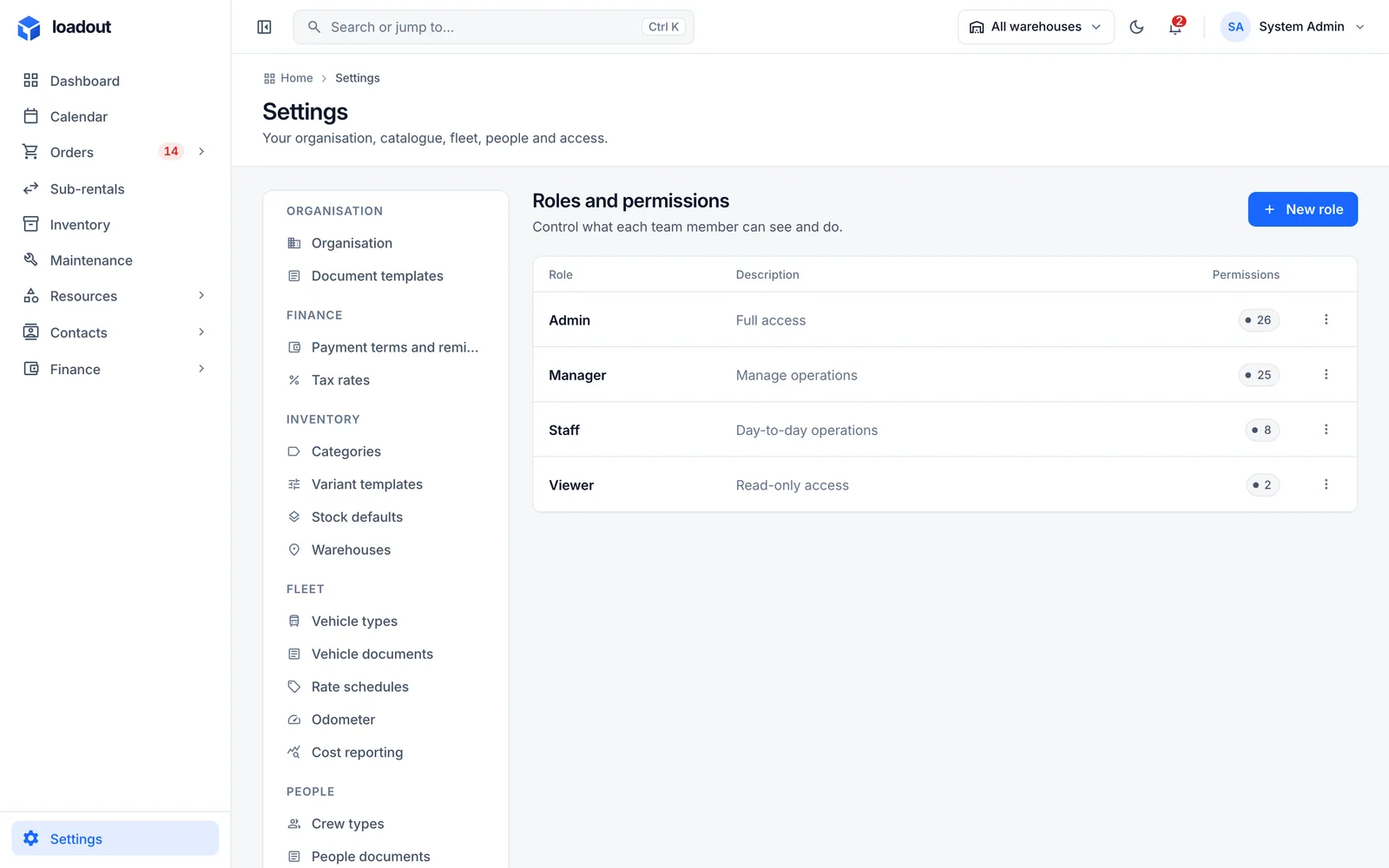
Roles and permissions
View, perform and approve granted separately, and per warehouse once there is more than one.
Rate schedules and tax rates
Vehicle rate schedules, item pricing rules, and the tax rates that appear on documents.
Document templates
Your logo, your terms and your numbering sequences on quotes, invoices and credit notes.
See it against your own kit list.
We are onboarding a small number of hire companies ahead of general availability. Tell us what you rent and how many depots you run, and we will arrange a walkthrough against your own kit list.